Tile Installation in NYC

Porcelain large-format, mosaic glass, hand-glazed ceramic, and natural stone tile across NYC and NJ. Schluter waterproofing, mitred outside corners, dry-laid mockups before adhesive goes down.

5.0

What we install

Four tile applications. One standard.

Bathroom shower walls, kitchen backsplashes, hand-laid mosaic feature walls, and large-format porcelain floors — same Schluter or RedGard membrane underneath, same dry-laid mockup before adhesive, same in-house tile and stone setters. The tile changes; the standard on the substrate, the membrane, and the joint does not.

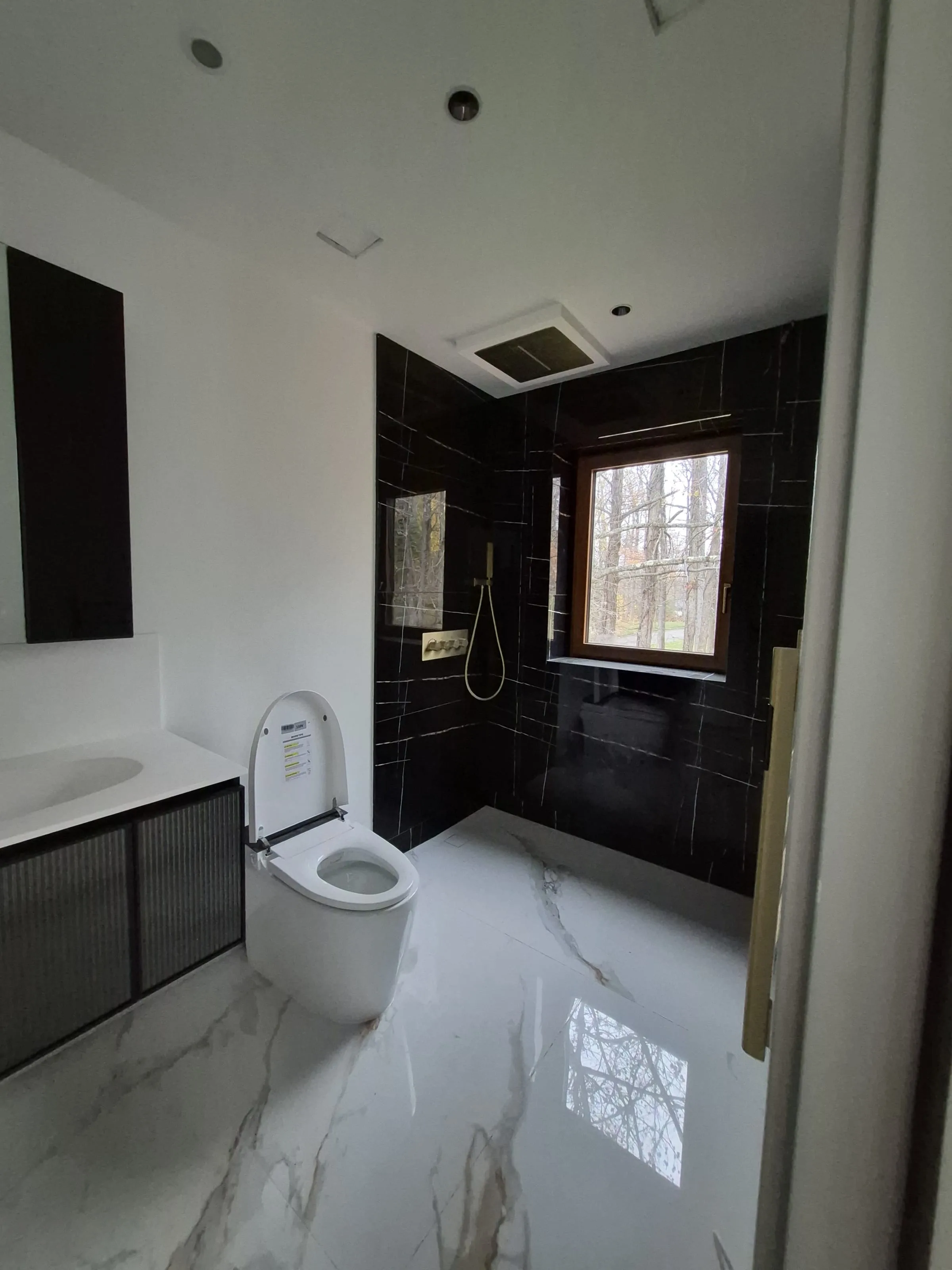
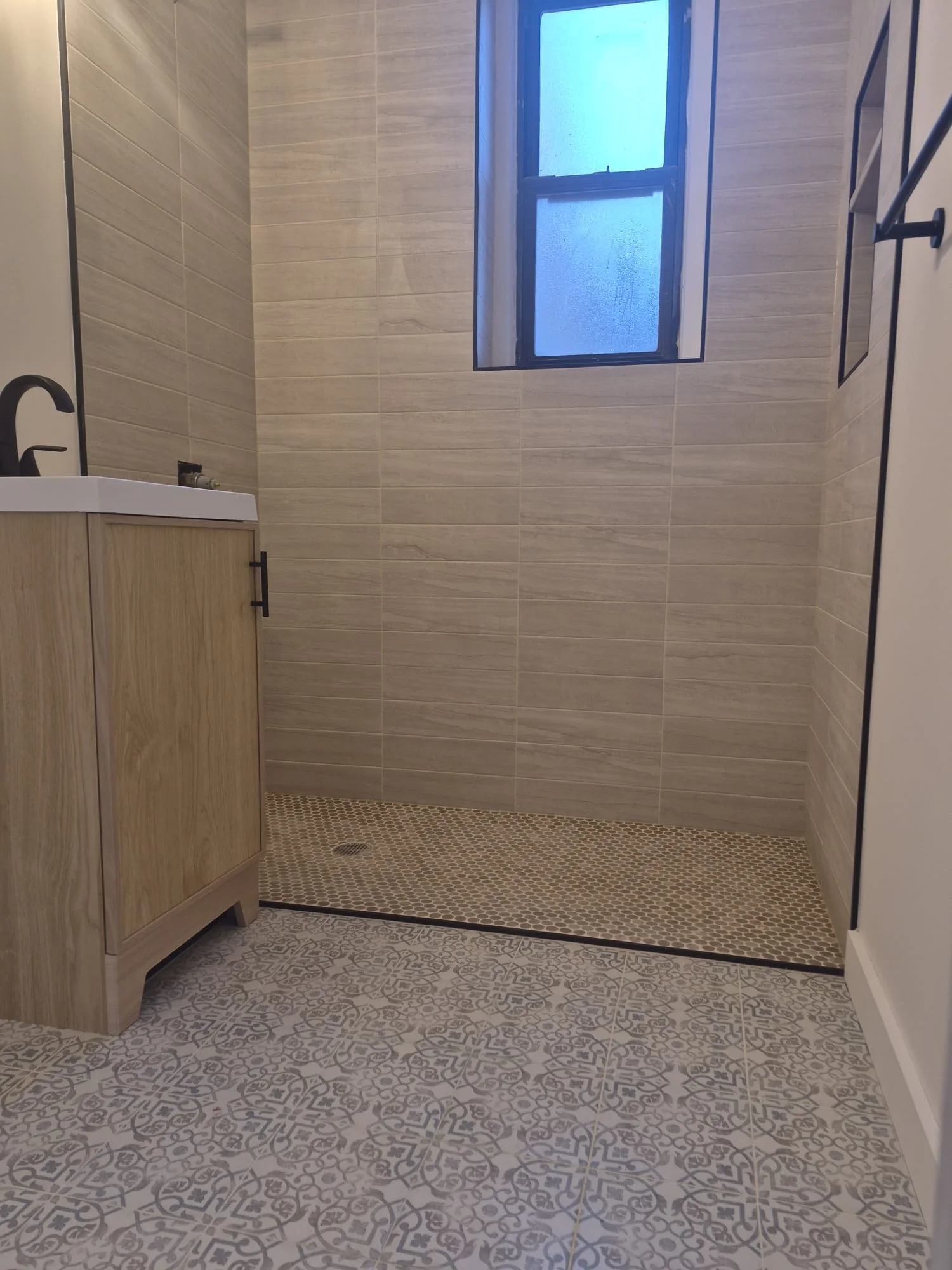
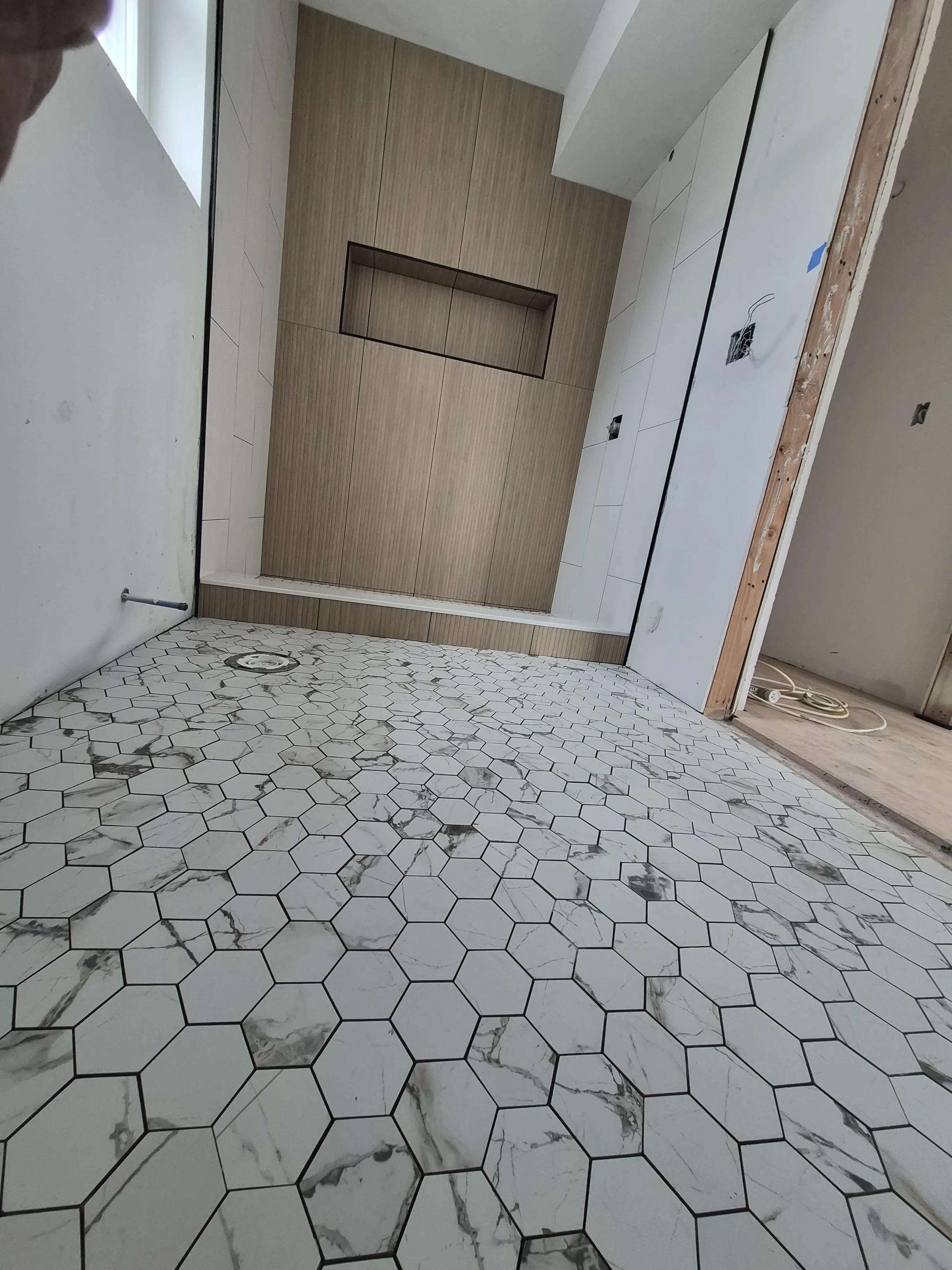
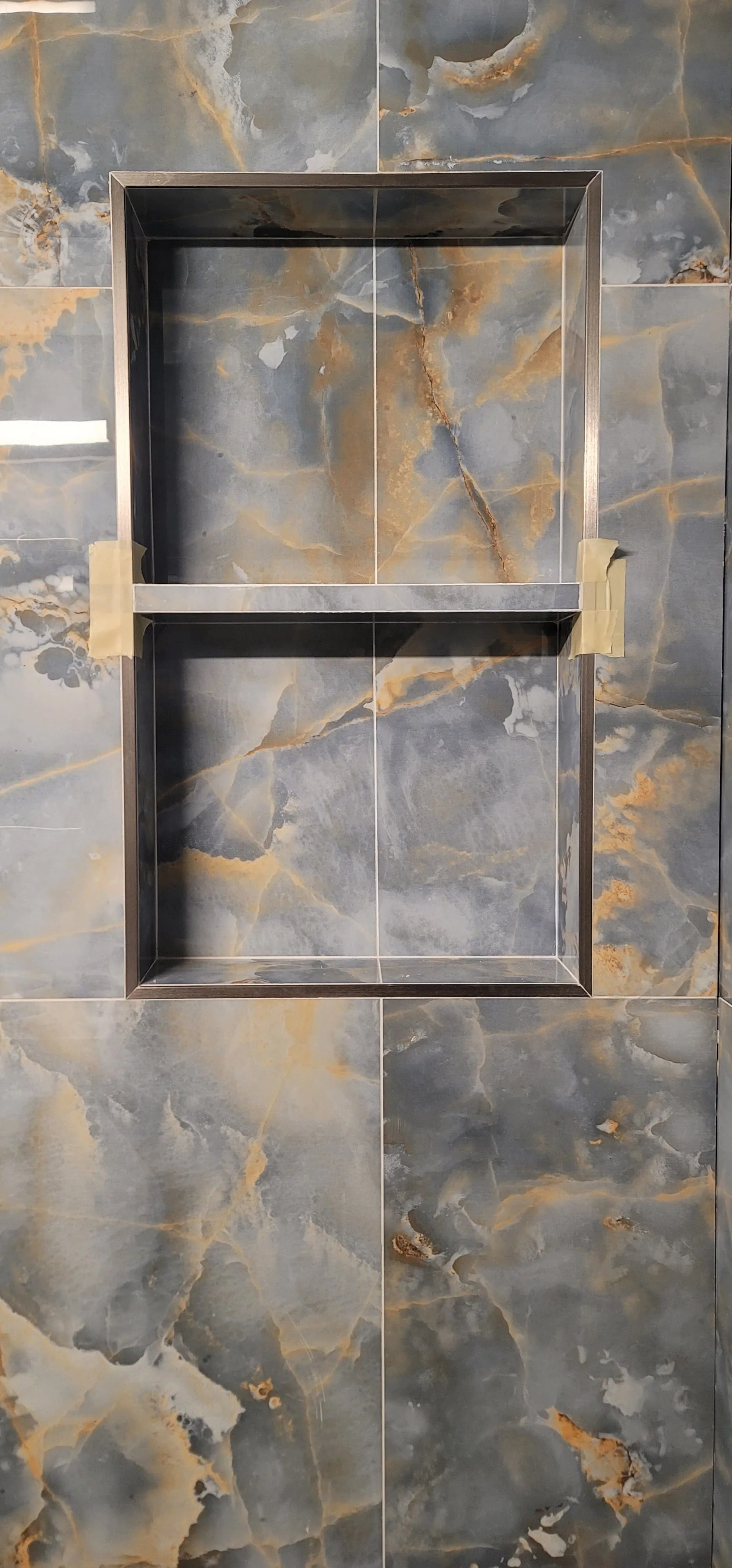
  • Walk-in wet room — wood-grain porcelain accent wall, hex marble floor, and recessed niche reference for bathroom tile installation

    Bathroom shower & wall tile

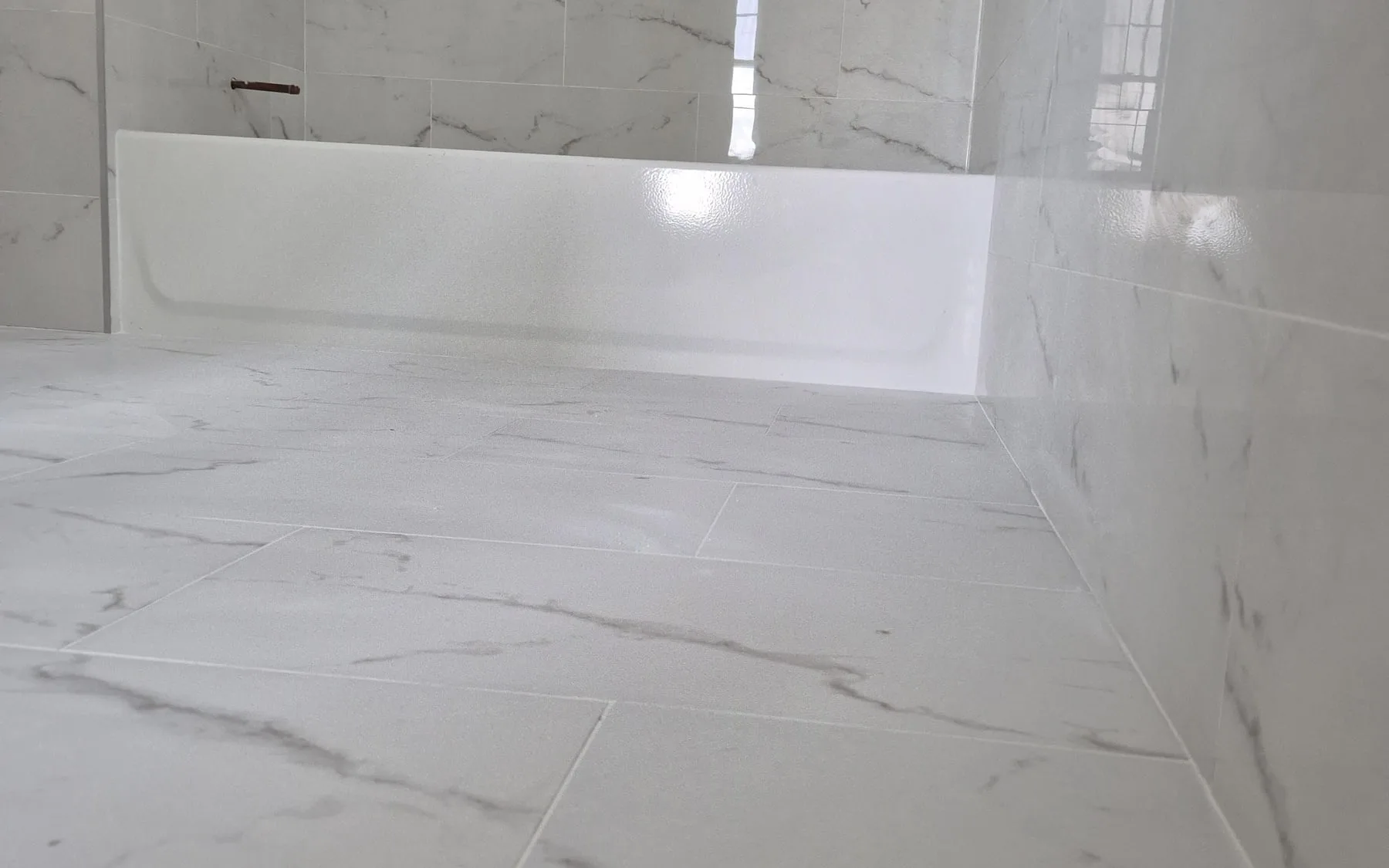
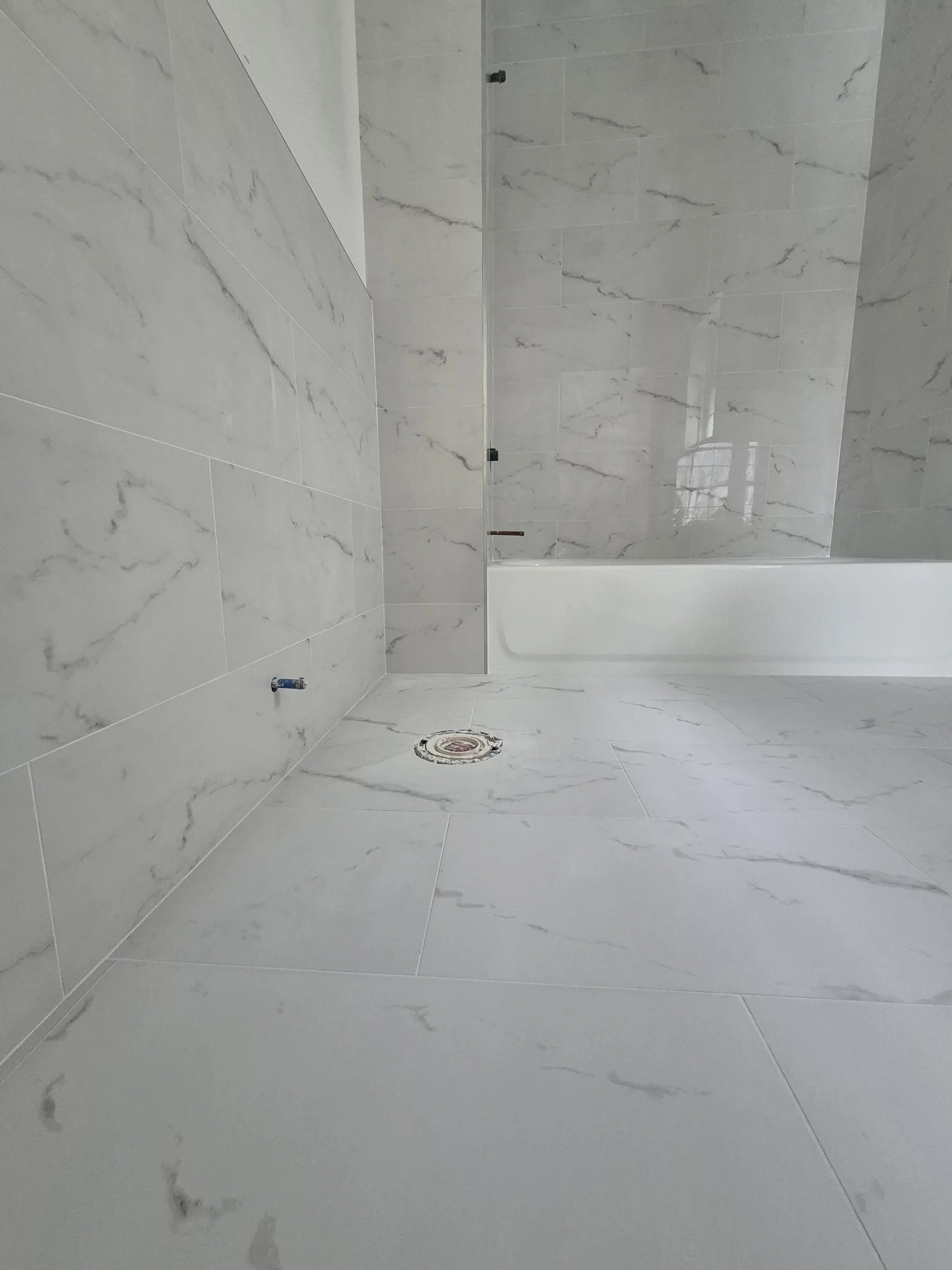
    Shower walls, tub surrounds, full-bath floors, and powder-room feature walls. Schluter or RedGard membrane on every wet wall and shower floor. Pan slope verified before tile goes down. Linear or point drains both supported.
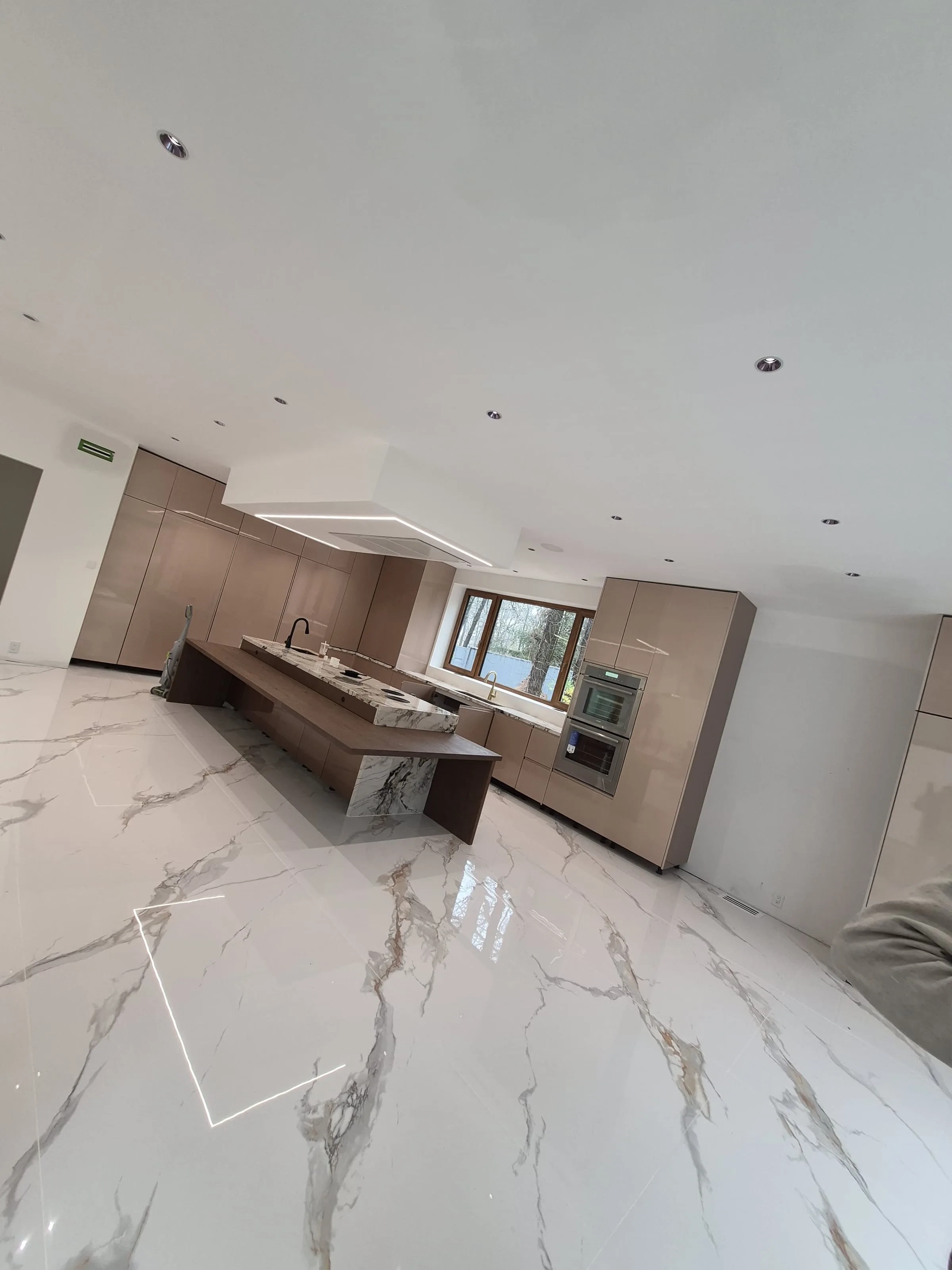
  • Modern kitchen with marble waterfall island and continuous slab-style backsplash — reference for kitchen tile and slab-backsplash work

    Kitchen backsplash

    Slab-continuation backsplashes, hand-laid mosaic, large-format porcelain, hand-glazed subway, and custom patterns. Sometimes a standalone scope on an existing kitchen; often part of a full kitchen remodel.

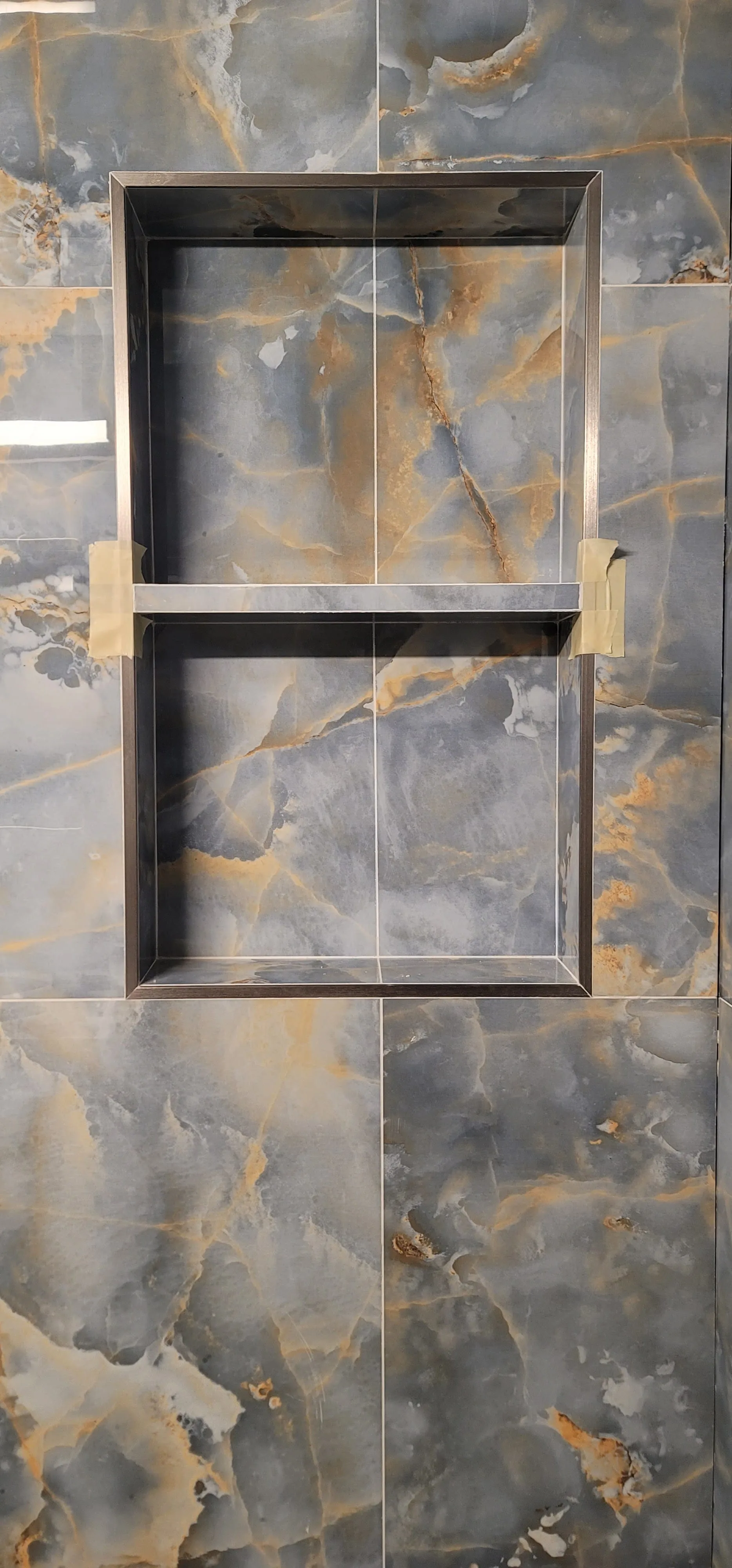
  • Powder-room mosaic feature wall — blue and gold onyx with steel-rimmed double niche, hand-set chip layout

    Mosaic feature walls

    Sheet-mounted glass mosaic for faster installs and broader pattern selection; fully hand-laid mosaic for custom or pictorial work. Common in powder rooms, behind kitchen ranges, and on accent walls behind freestanding tubs.

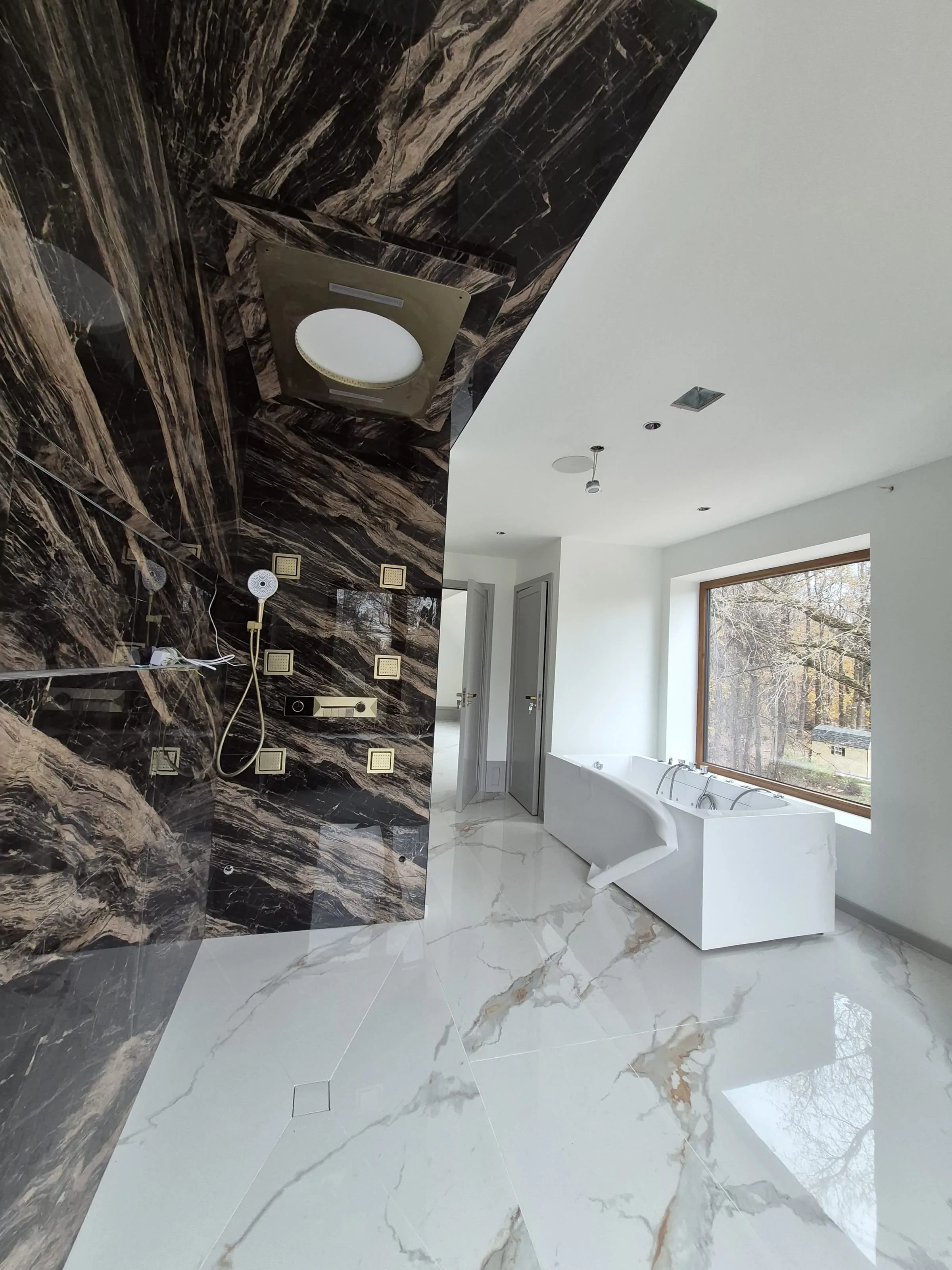
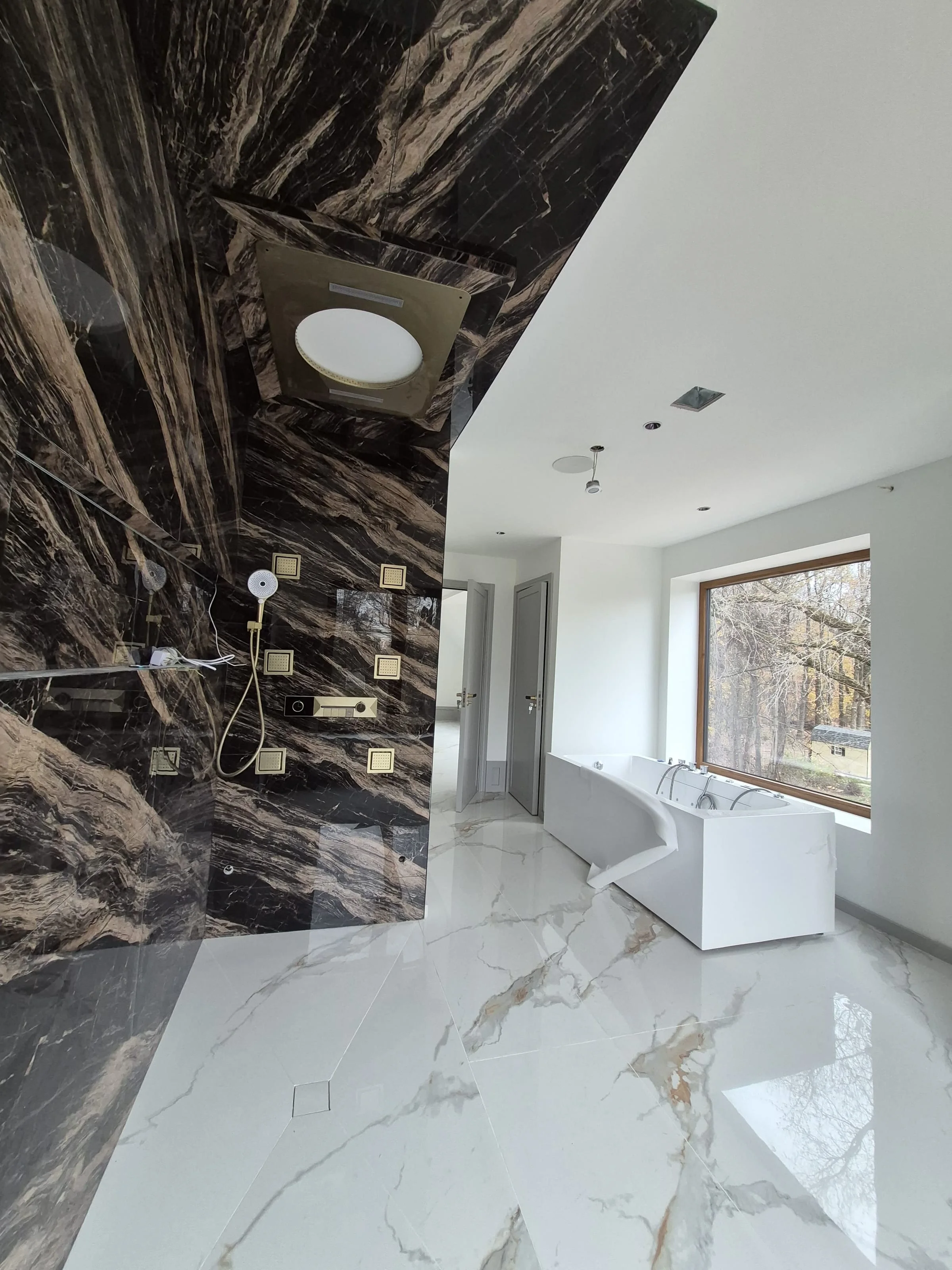
  • Bookmatched bookend wall reading as large-format porcelain panel — reference for slab-format tile installation in a primary bath

    Large-format porcelain

    Twenty-four-by-forty-eight, forty-eight-by-forty-eight, and slab-format porcelain panels up to 5×10 feet. Reinforced substrate, leveling-lippage systems during set, and double-back mortar buttering. Increasingly the spec for high-end bath floors and shower walls because it minimizes grout lines.

Materials & Standards

Six standards. No shortcuts.

Tile work lives or dies on the millimetre details — the membrane underneath, the joint width, the angle of an outside corner, the seal on porous stone before grout. The six standards below run the same on a powder-room feature wall and a bookmatched master bath floor.

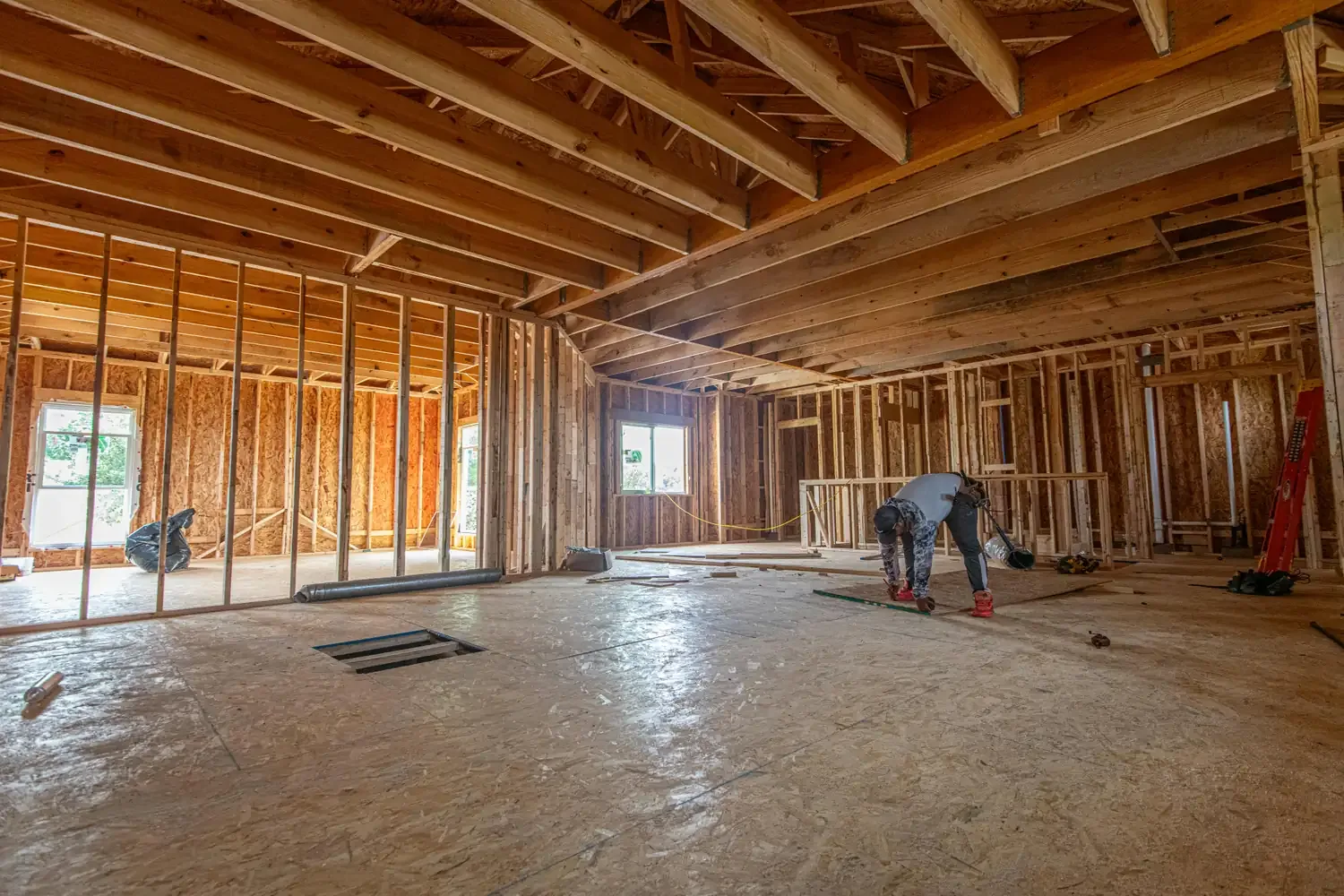
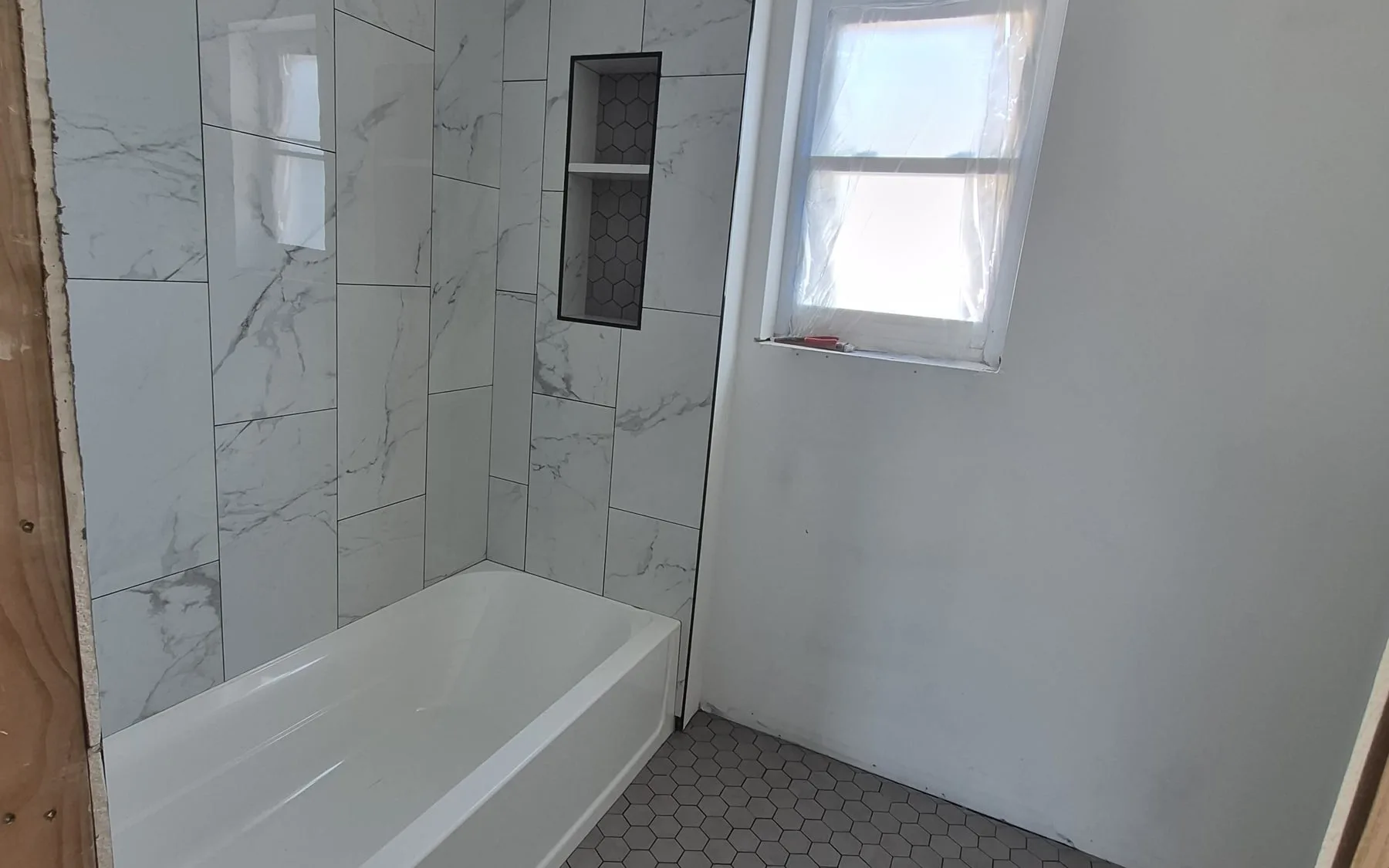
  • Bare framing and substrate prep — waterproofing-membrane stage before tile installation

    Waterproofing.

    Schluter Kerdi or RedGard membrane on every wall and floor in a wet area — showers, tub surrounds, wet-room layouts. Pan slope verified before tile. Linear and point drains both supported. No tier-based shortcut on the membrane — every project, every wet wall.
  • Porcelain tile stock — small-format, large-format, and slab-format reference for floor and wall installs

    Porcelain.

    Small-format, large-format (24×48, 48×48), and slab-format porcelain panels up to 5×10 feet. Reinforced substrate prep on large-format. Leveling-lippage systems during set. Double-back mortar buttering — standard, not an upgrade.

  • Natural stone tile stock — marble and travertine reference for floor and wall installs

    Natural stone tile.

    Marble, limestone, travertine, and slate in tile format. Pre-sealed before grouting (so the grout doesn't stain the surrounding tile), final seal applied at completion. Care guide and re-seal schedule delivered with the warranty packet.

  • Pre-war Upper West Side bathroom with hand-set classic stone tile — reference for hand-laid mosaic and chip-set craftsmanship

    Hand-laid mosaic.

    Sheet-mounted (chips pre-mounted on a backing) for faster installs and broader pattern selection. Fully hand-laid mosaic — chip by chip, no backing — for custom patterns, pictorial work, and high-end statement walls. We do both.

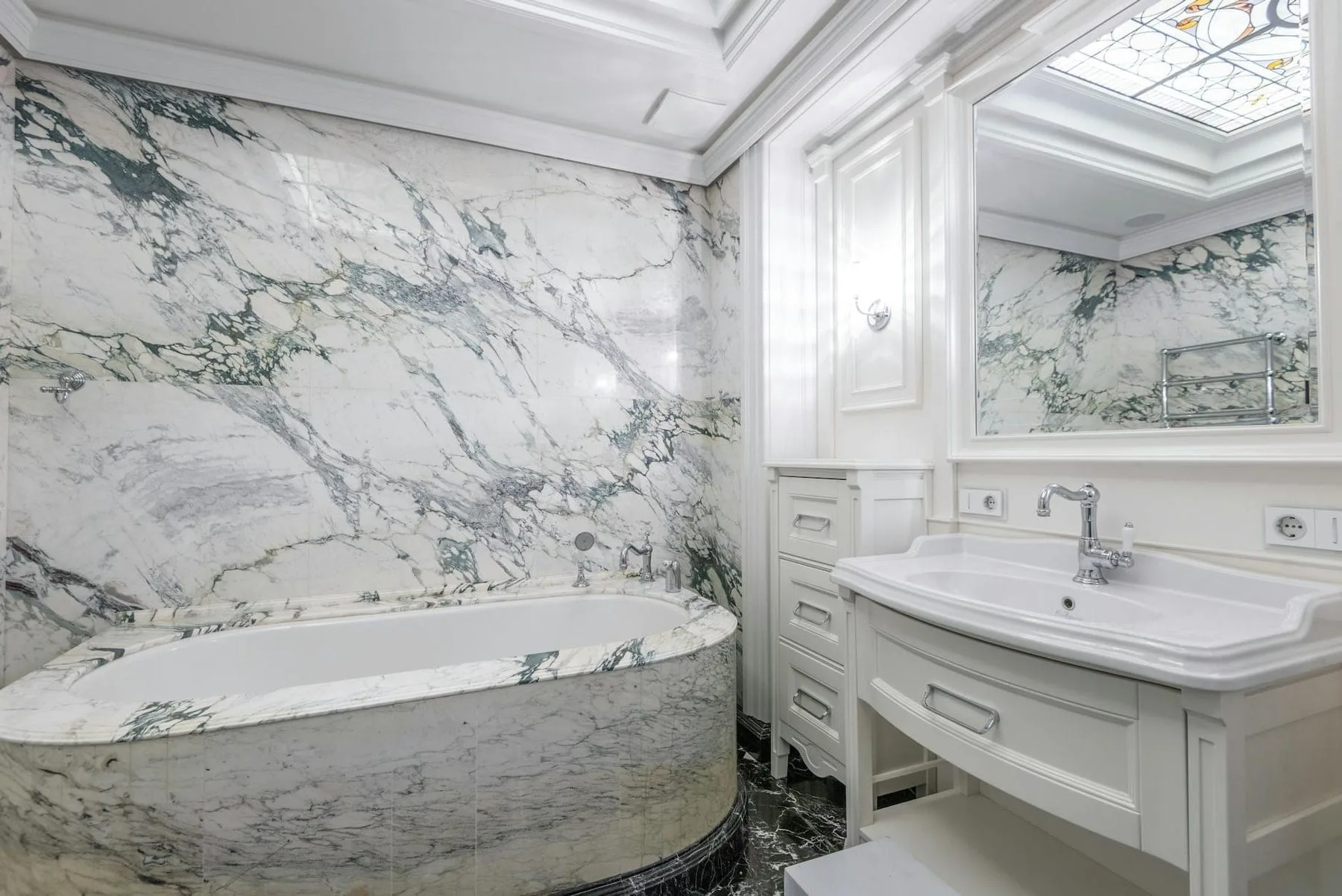
  • Walk-in marble bathroom with mitred outside-corner returns — reference for high-end natural-stone tile finish

    Mitred outside corners.

    Two tiles cut at 45 degrees so the visible edge reads as a single continuous piece of stone wrapping the corner. Default on natural stone where the design calls for it; Schluter or bullnose profile on porcelain and ceramic where mitring isn't visually warranted.

  • Luxury master bath with bookmatched marble walls and heated-mat-compatible polished marble floor — reference for tile-with-heated-floor installs

    Heated-floor systems.

    Electric mat or hydronic tubing installed beneath the tile, on top of the membrane, controlled by a thermostat. Best in master bathrooms, primary bathrooms used in the morning, and basement floors. Line-itemed on the proposal so the floor-area economics are clear.

Process

Four steps. No surprises.

Tile work runs as part of a remodel. A typical bathroom tile run is 1 to 2 weeks once the rough-in is closed and the membrane is up; a kitchen backsplash runs 3 to 5 days. Standalone tile-only scopes are possible — a backsplash replacement, a single-bath re-tile — but they share the same four-step process below.

  1. Free consultation

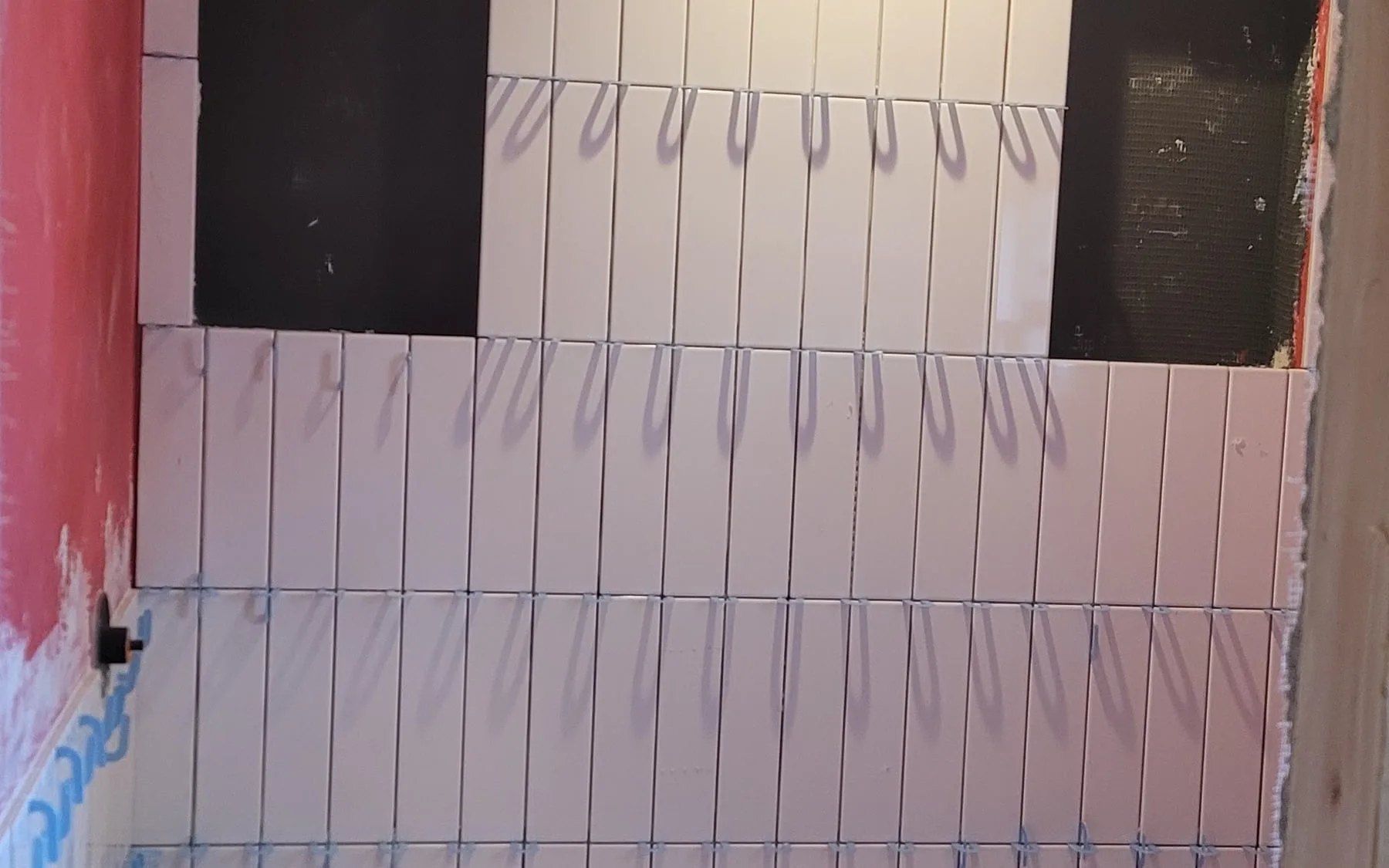
    On site or by video. We bring real samples — porcelain, ceramic, mosaic, natural stone — plus a Schluter sample so the membrane standard isn't abstract. Pattern, joint width, and outside-corner approach discussed in person.

  2. Substrate & waterproofing

    Cement board on floors and wet walls (over wood subfloor) or direct-to-membrane on concrete. Schluter or RedGard membrane on every wet area. Pan slope verified. Heated-floor mat installed where specified, before tile goes down.

  3. Dry-laid mockup & set

    Complex patterns, mosaic feature walls, and large-format work dry-laid in front of the install location to confirm pattern, joint width, and outside-corner approach before adhesive. Mortar back-buttered for large-format. Lippage-leveling systems on big tile. Mitred outside corners on natural stone where called for.

  4. Grout, seal & warranty

    Grout color confirmed against a wet sample on a small section before bagging. Pre-seal applied to natural stone before grouting; final coat at completion. Care guide and the 2-year written workmanship warranty delivered at handover.

Featured Projects

Recent tile installs. Built to last.

A few recent tile projects across NYC and northern NJ. Each links to a full case study with the tile spec, the membrane system, and the timeline.

Service Areas

Where we build.

We’re based in Newark, NJ, and we work across the NYC metro from there. Five boroughs, Long Island, Yonkers, and northern New Jersey are all on the standard route.

And 30+ surrounding cities within a 50-mile radius of Newark, NJ

FAQs

Common questions.

Everything we get asked about scope, timeline, materials, and how the work actually runs.

What types of tile do you install?

Porcelain (small-format, large-format, slab-format up to 5'×10'), ceramic (hand-glazed, machine-made, subway, custom), glass mosaic (sheet-mounted and individual chip), natural stone tile (marble, limestone, travertine, slate), and cement-look porcelain. We also install heated-floor systems under tile in any of these formats. We don't install vinyl tile or peel-and-stick — those aren't our category.

Do you handle large-format porcelain (24×48 and bigger)?

Yes. Large-format porcelain — 24×48, 48×48, and slab-format porcelain panels up to 5×10 feet — requires special handling: leveling lippage systems during set, double-back buttering of mortar, and reinforced subfloor preparation to prevent cracking under load. We use these techniques as standard. Large-format is increasingly the spec for high-end bathroom floors and shower walls because it minimizes grout lines.

What waterproofing system goes under wet-area tile?

Schluter Kerdi or RedGard membrane on every wall and floor in a wet area — showers, tub surrounds, wet-room layouts. Pan slope verified before tile goes down. Linear drains and point drains both supported. We don't shortcut the membrane by tier; it goes on every project regardless of finish tier. The membrane is the single most important detail in a tile job because every other failure traces back to it.
Can you do hand-laid mosaic feature walls?

Yes. Sheet-mounted mosaic (where the small chips come pre-mounted on a backing) installs faster and is more common; we install plenty of it. Fully hand-laid mosaic — chip by chip, no backing — is slower and more expensive but produces a more crafted look, especially for custom patterns or pictorial work. We do both. Most powder-room feature walls use sheet-mounted; high-end statement walls often justify hand-laid.

Do you do mitred outside corners on natural stone tile?

Yes — mitred is the high-end finish on outside corners (where two perpendicular tile planes meet). The two tiles are cut at 45 degrees so the visible edge looks like a single continuous piece of stone wrapping the corner. The alternative is a Schluter or bullnose edge profile, which is faster and more economical. We default to mitred on natural stone where the design calls for it; we use Schluter on porcelain and ceramic where mitring isn't visually warranted.

Heated floor under tile — how does it work?

An electric mat or hydronic tubing system installed beneath the tile, on top of the membrane and substrate, controlled by a thermostat. The mat heats the tile from below; the tile spreads the heat evenly across the floor. Best in master bathrooms, primary bathrooms used in the morning, and basement floors. The system adds about $8-15 per square foot to the floor depending on size and control type — we line-item it on the proposal so you can see the cost vs. the floor area.

Can I bring my own tile?

Yes. If you've sourced tile already — a specific Italian porcelain, a hand-made ceramic from a specific maker, a tile you've been holding for two years — we'll install it. We add a clarifying note to the contract: warranty on the installation is ours; warranty on the tile itself stays with whoever sold it. We confirm tile quantity (with the standard 10–15% overage for cuts) before the order is placed so you don't run short mid-project.

How do you handle natural stone tile that needs sealing?

Natural stone tile (marble, limestone, travertine) is porous and needs sealing to prevent staining. We pre-seal stone tile before grouting (so the grout doesn't stain the surrounding tile), then apply a final seal at completion. We deliver a written care guide with the warranty packet listing the specific sealer used and a re-sealing schedule (typically every 2 to 3 years for residential interior use).

Project intake

Tell us what you're planning.

Free Consultation

Ready to start? Let’s talk.

Call to walk through your project, or schedule a free consultation — by video if you can’t be on site, in person if you can. We bring sample materials, a measuring kit, and a written scope back to you within a few business days.

Licensed Insured Bonded 10+ years

Mon–Sun · 8 AM–6 PM