
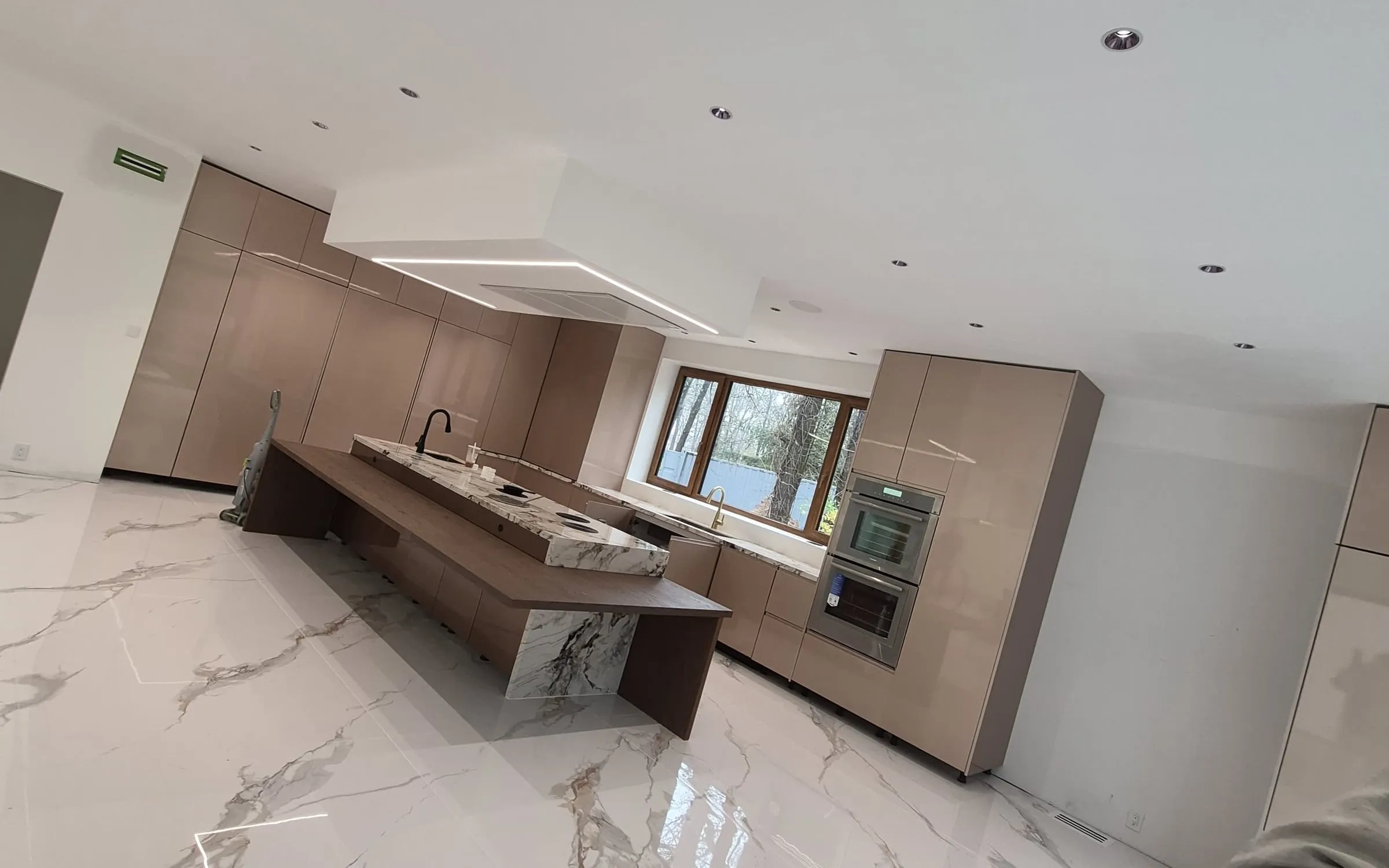
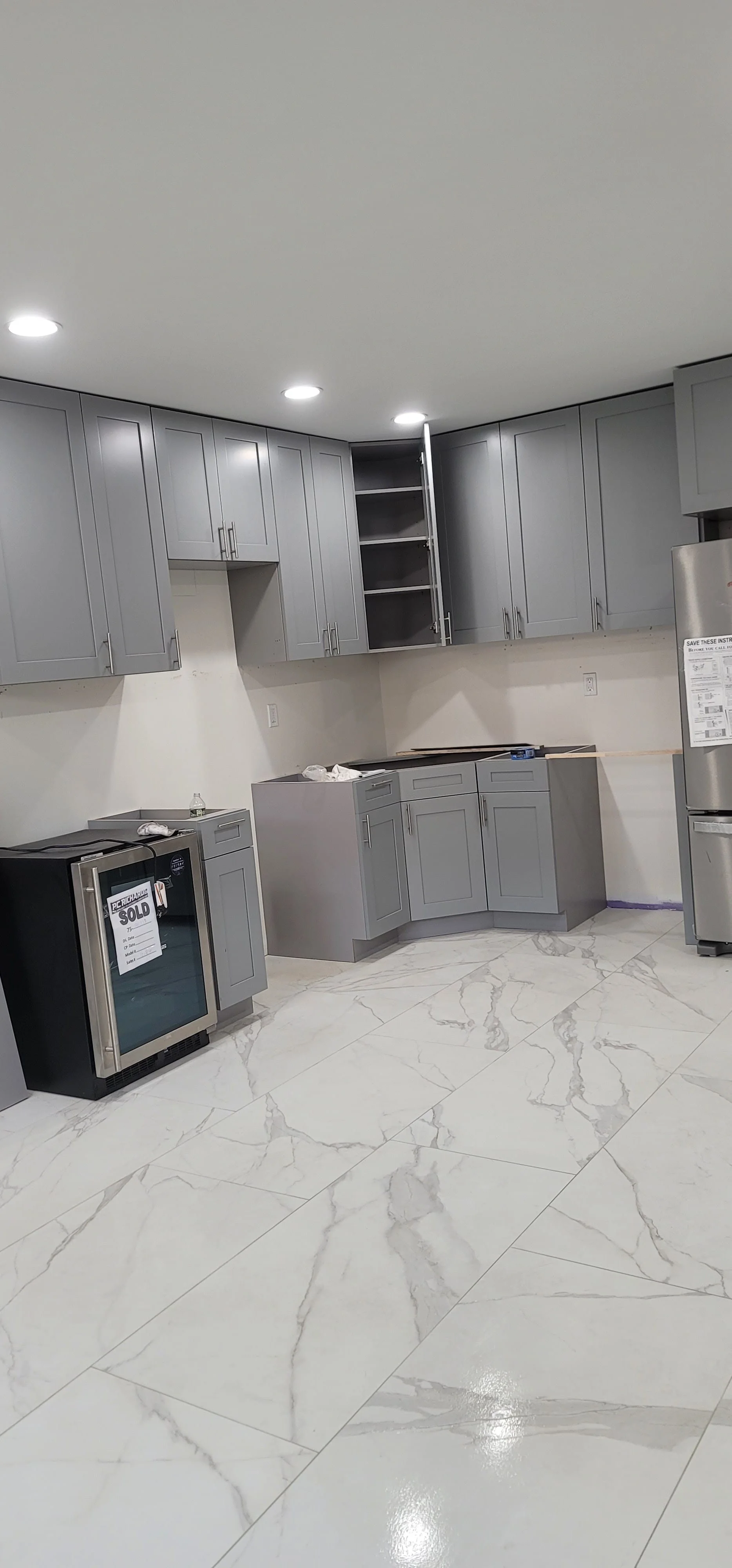
What we build in Queens
Nine disciplines. One standard.
Two-family duplex bath and kitchen work, single-family gut renovations, mid-century co-op refreshes, and modern waterfront condo interiors make up most of the Queens portfolio. Same standard whether the project is a two-family parallel-unit renovation or a single bath in a garden-apartment co-op.
-
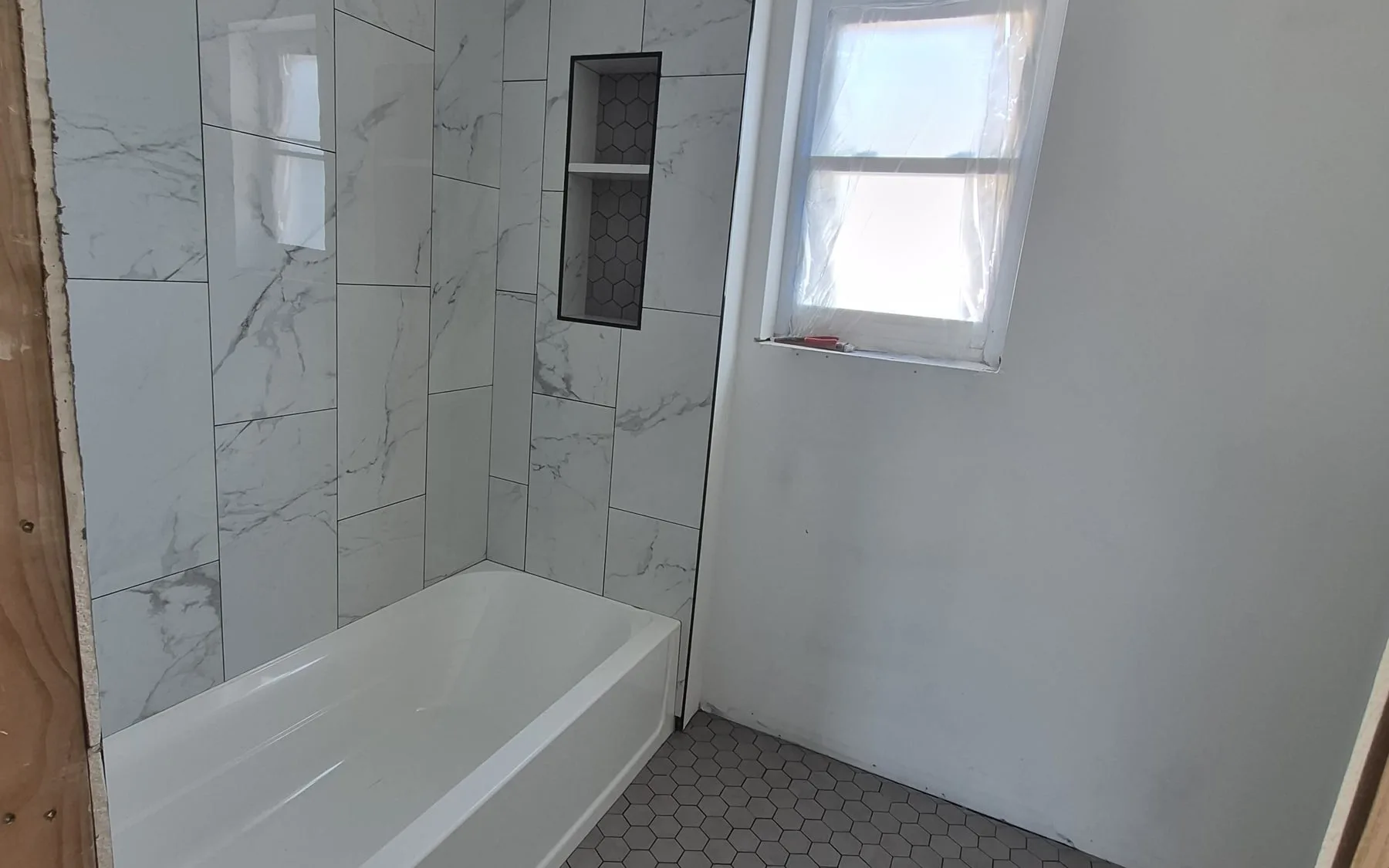
Bathroom remodeling
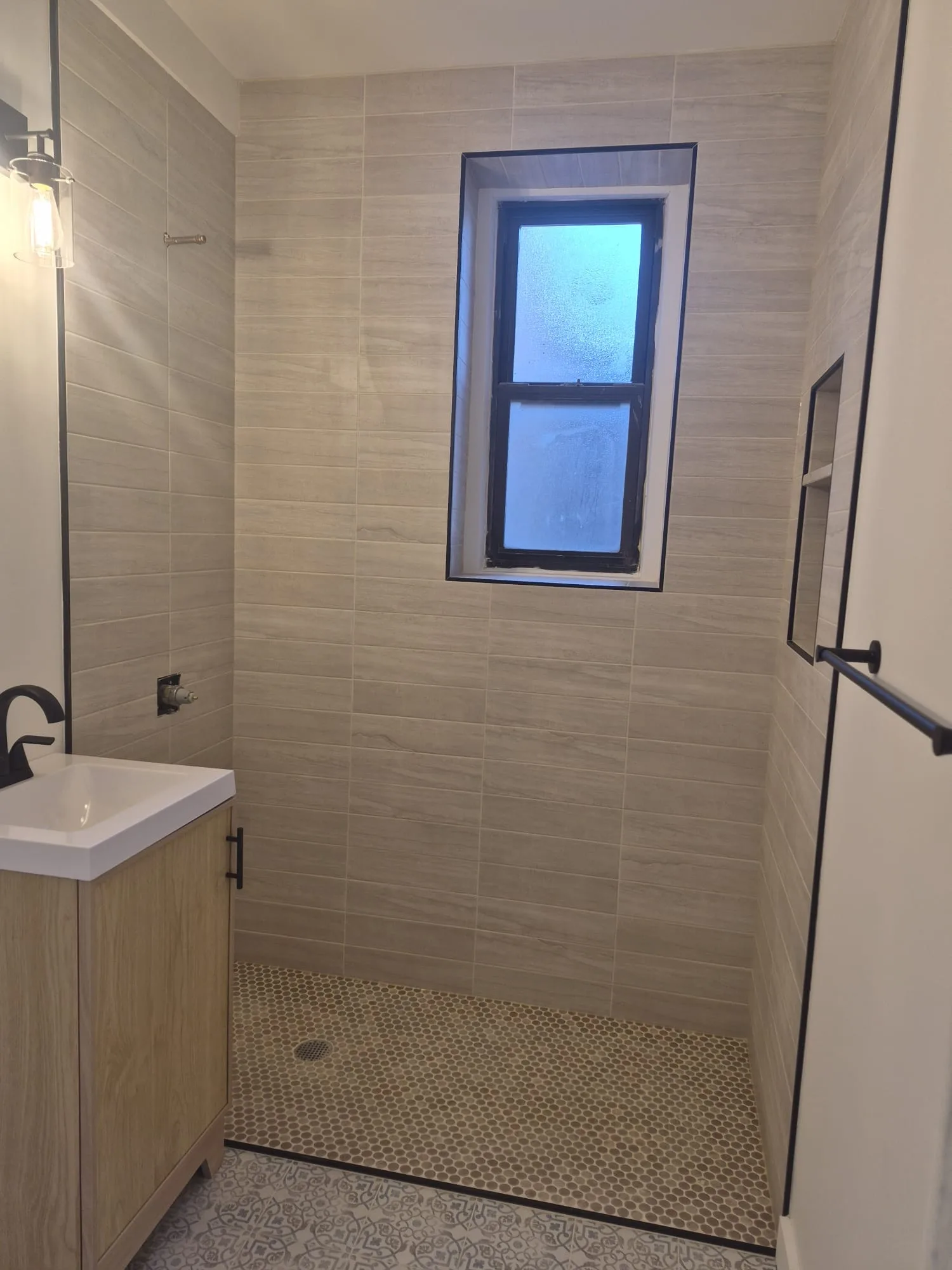
Two-family primary baths, single-family secondary baths, and co-op powder rooms across the Queens housing mix. Full Schluter waterproofing under every wet wall — same standard regardless of building age. Ground-level material delivery on garden apartments; freight-elevator handling on the high-rises.
-
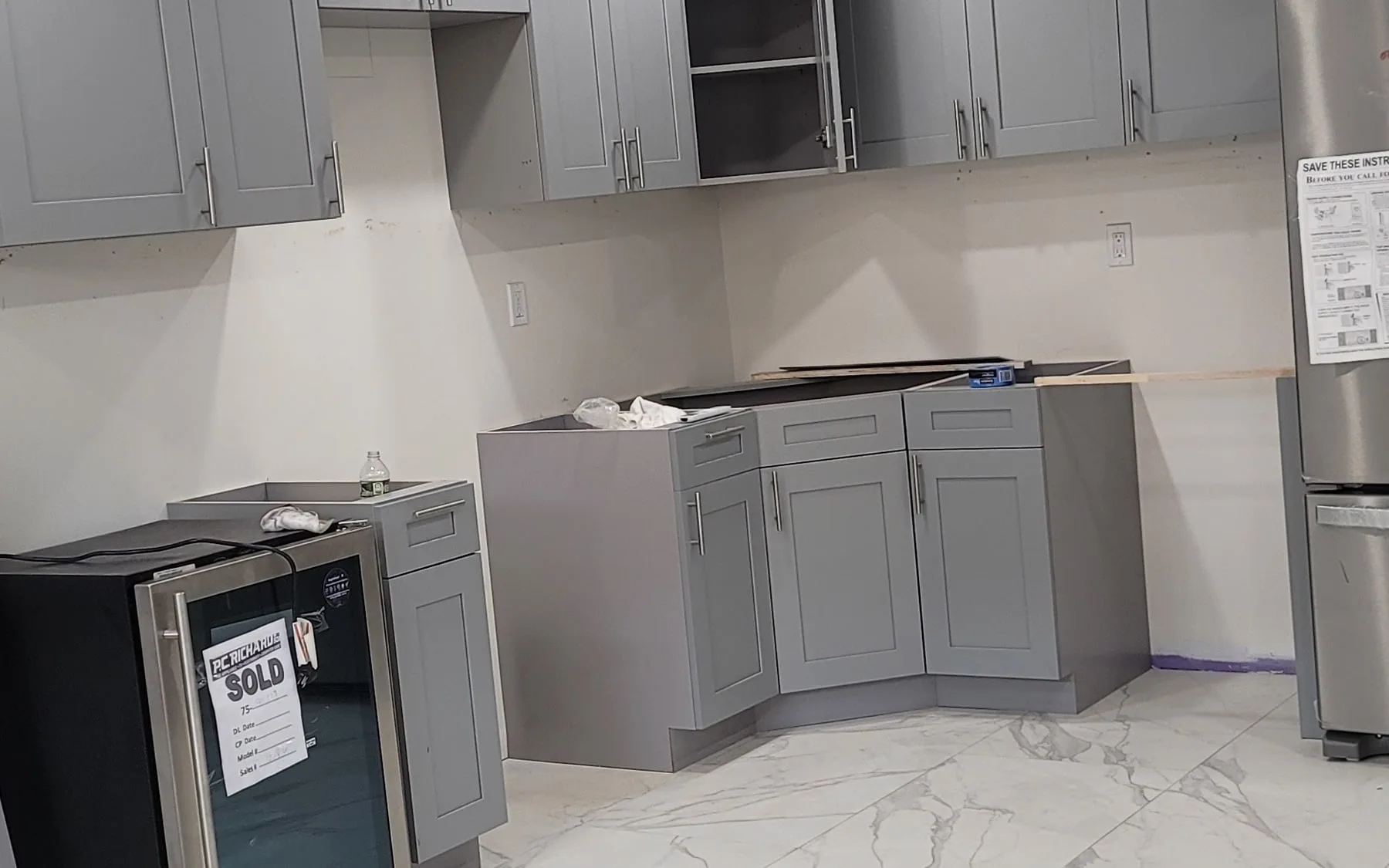
Kitchen remodeling
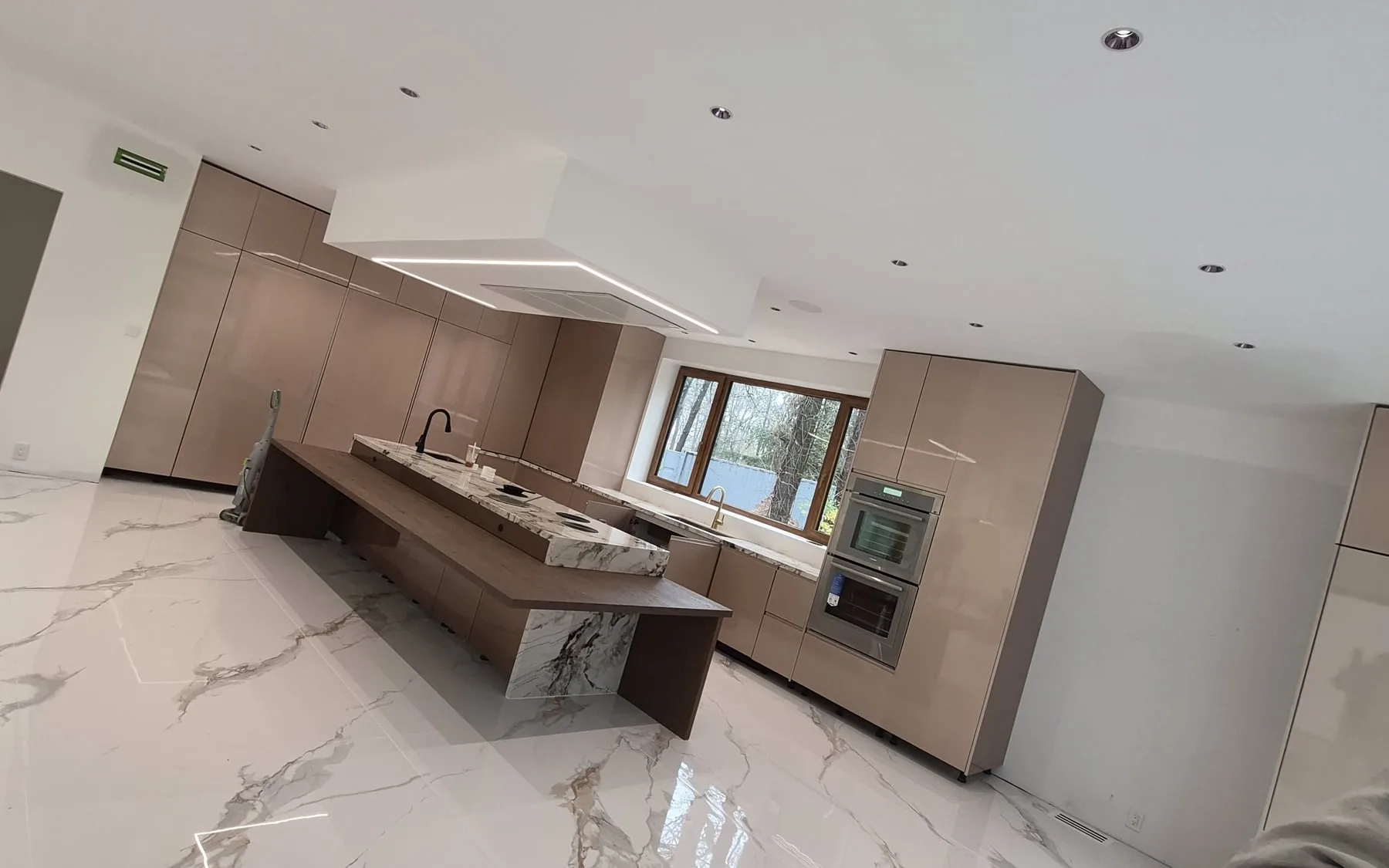
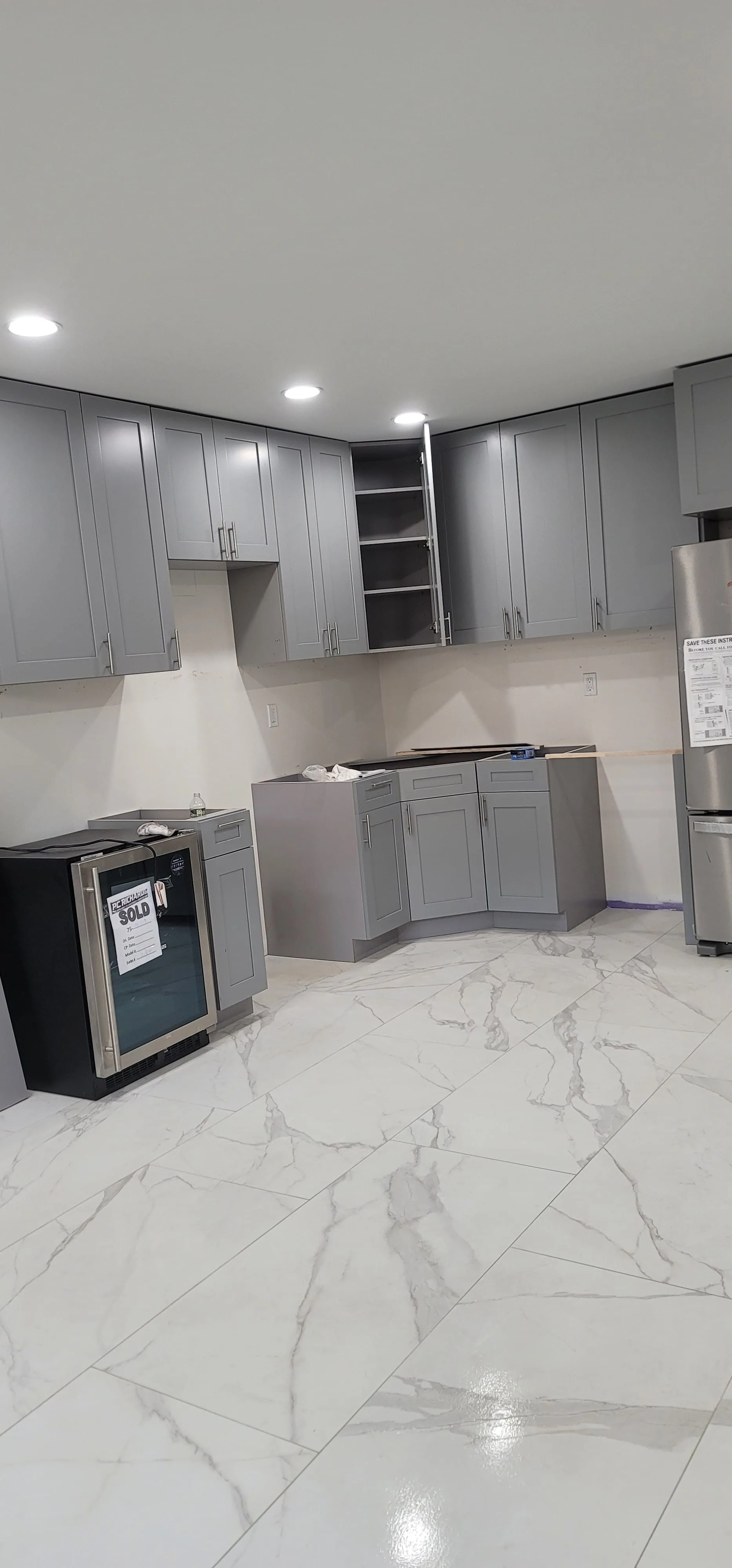
Custom cabinetry, slab quartz or marble countertops, and load-bearing wall removals with structural-engineer beam designs for the closed-galley to open-plan conversions common in Queens single-family stock.
-
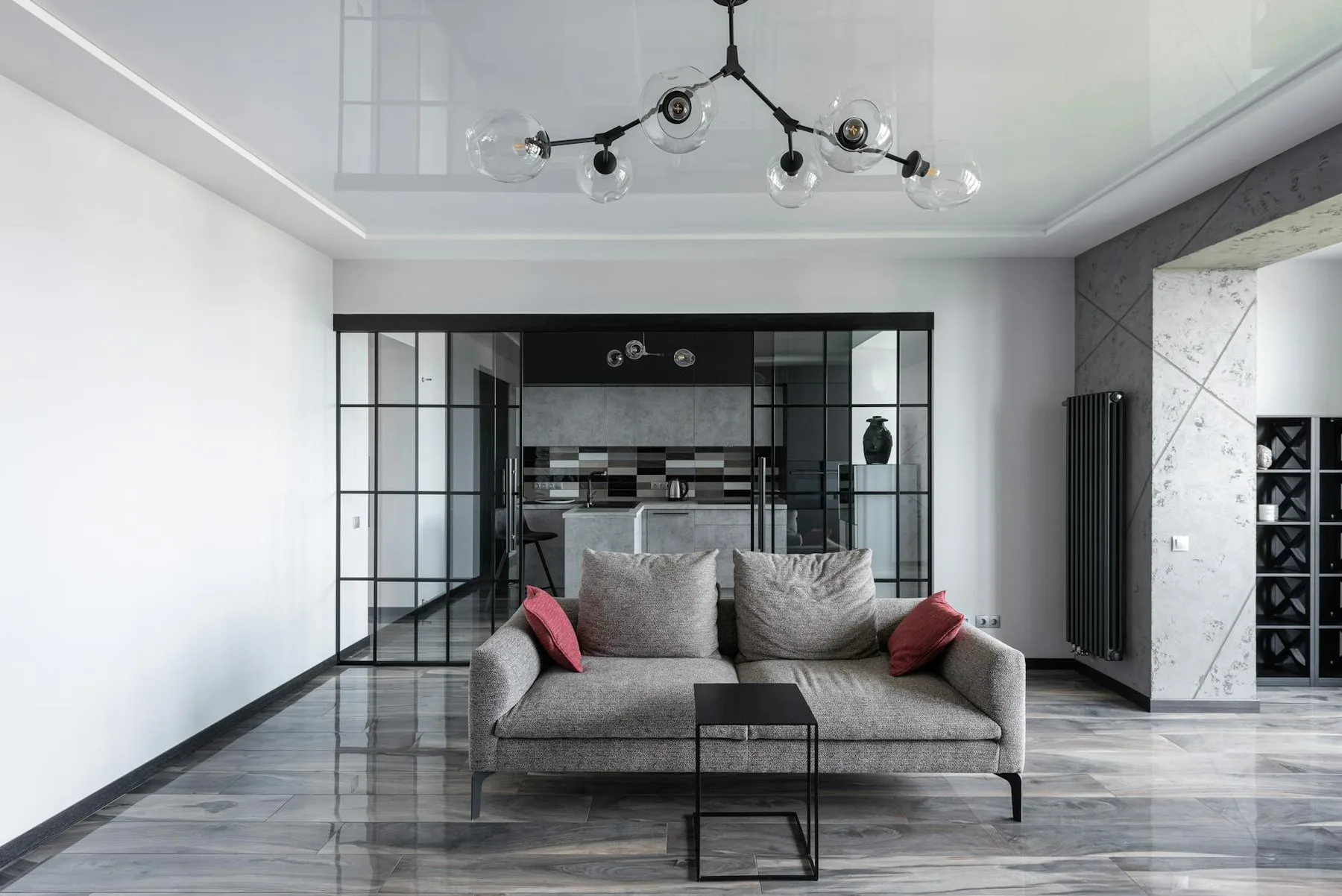
Apartment, co-op & condo remodeling
Mid-century co-op alteration agreements, modern condo board packages, COI requirements, and freight elevator scheduling — all handled under our license. Lighter governance than upper-tier Manhattan equivalents on most Queens buildings.
-
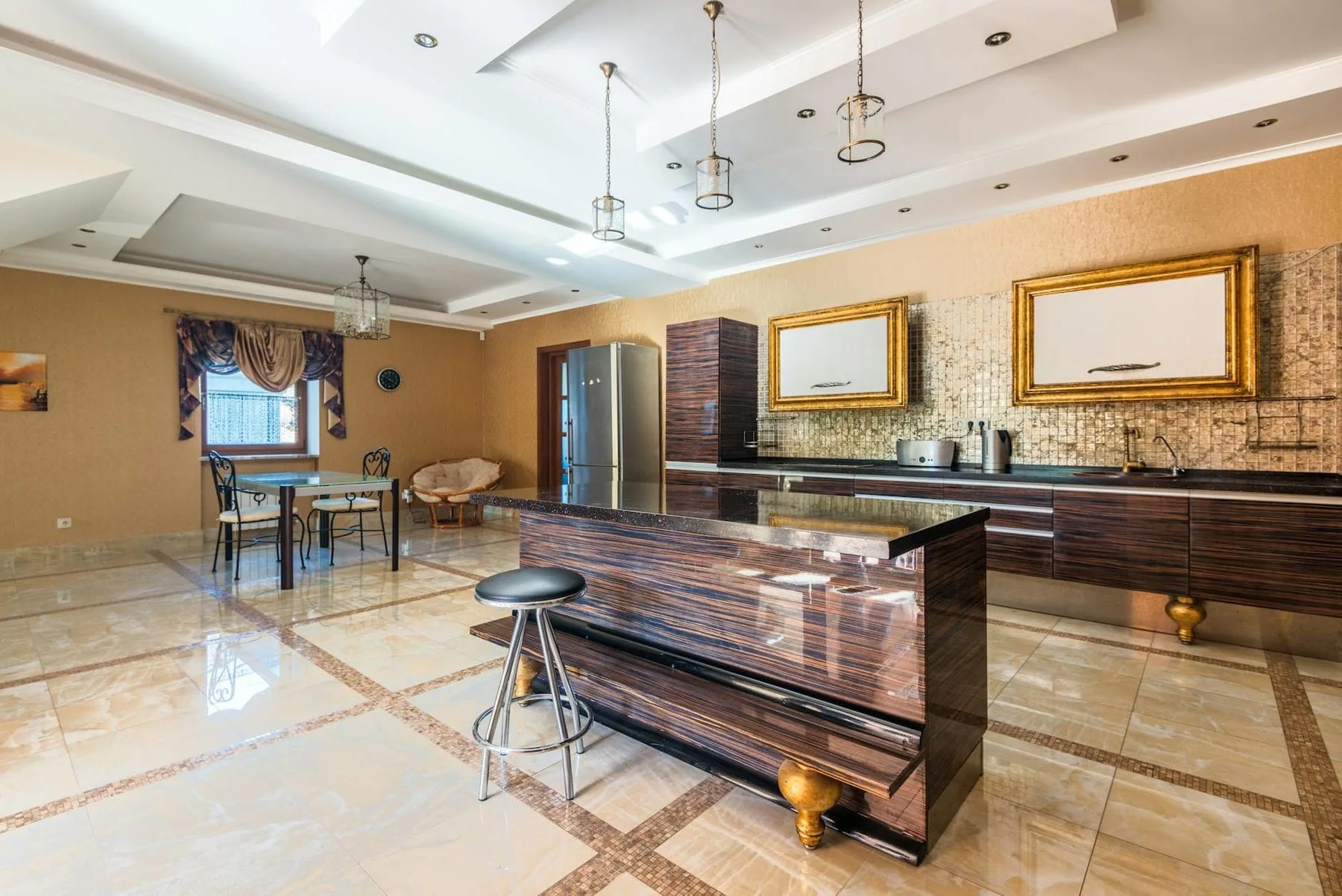
Full home remodeling
Two-family duplex parallel-unit gut renovations are the dominant Queens full-home build — both units bath and kitchen work in coordinated phases. Single-family whole-house renovations follow a similar sequence on the larger detached lots.
-
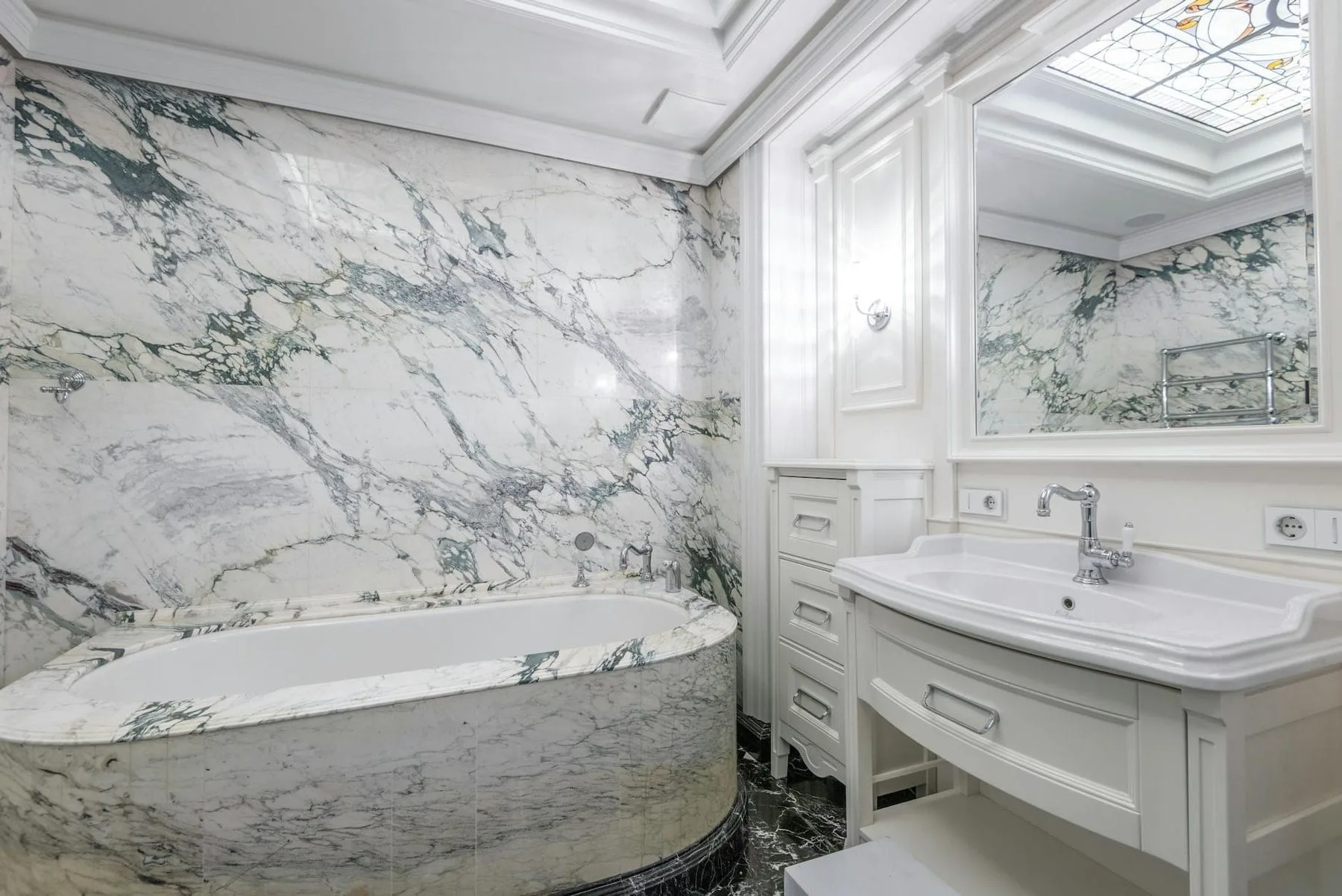
Marble & natural stone
Calacatta, Carrara, and statuario slab work. Bookmatched walls, mitred edges, waterfall vanities, and custom feature niches — templated on site, fabricated locally, slab orientation marked before delivery.
-
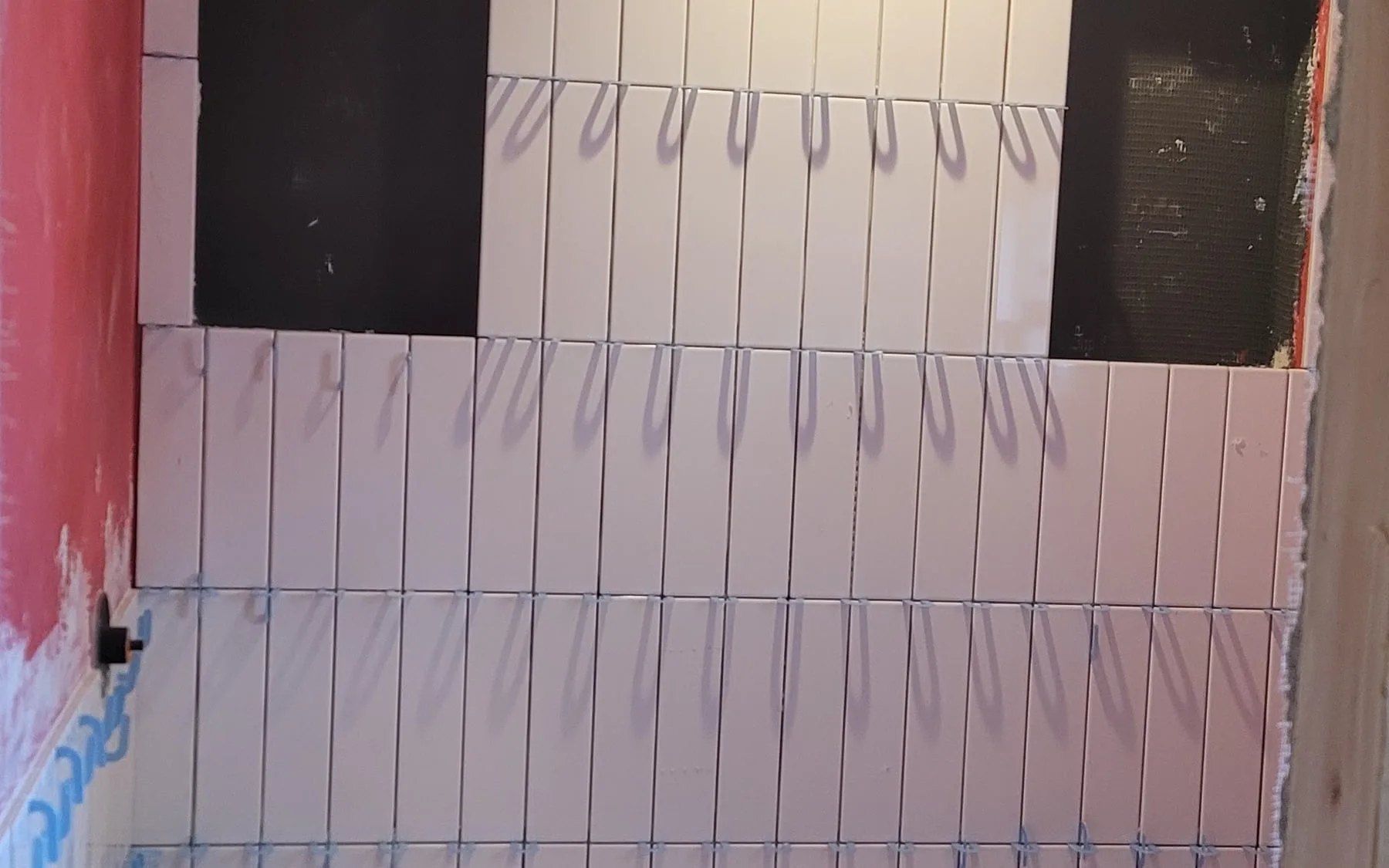
Tile installation
Large-format porcelain, hand-laid mosaic, hand-glazed ceramic, and heated-floor systems. Schluter waterproofing under every wet wall. Hand-laid mockup before any adhesive sets.
-
Flooring installation
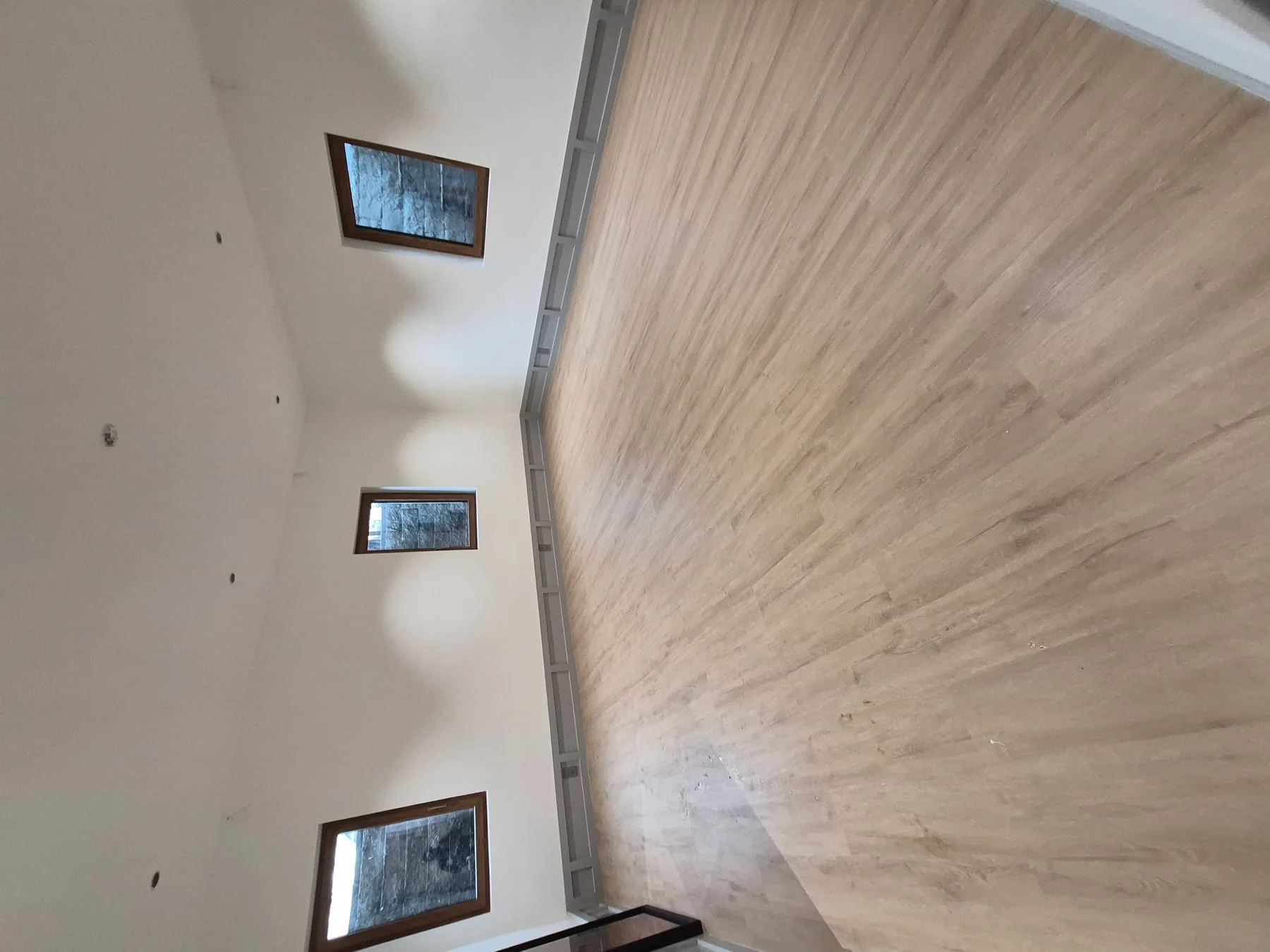
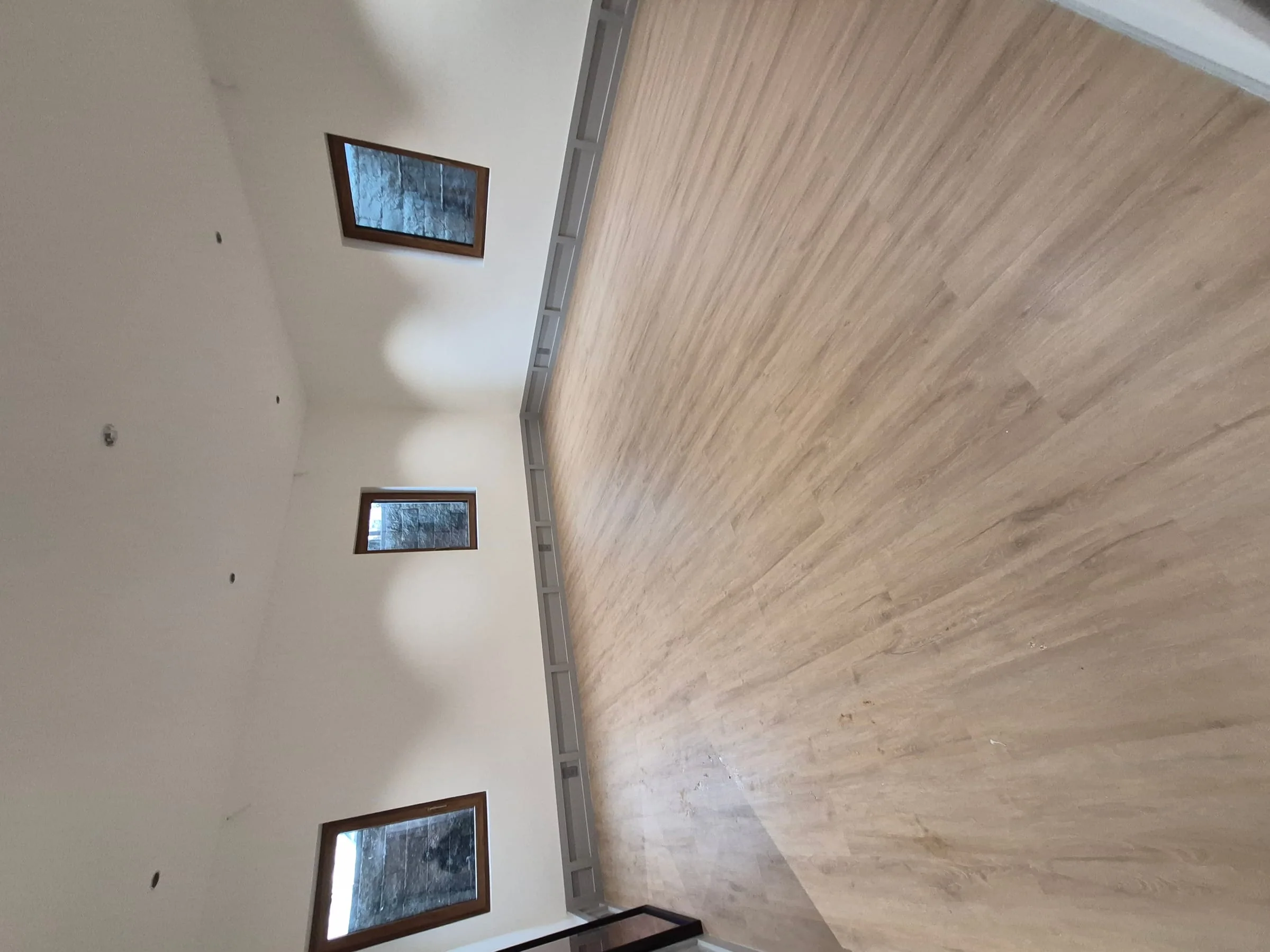
Sand-and-refinish on original hardwoods in pre-war Queens stock, engineered wood with acoustic underlayment for upper-floor co-op and condo work, and wide-plank installs across two-family parallel-unit renovations.
-
Basement remodeling
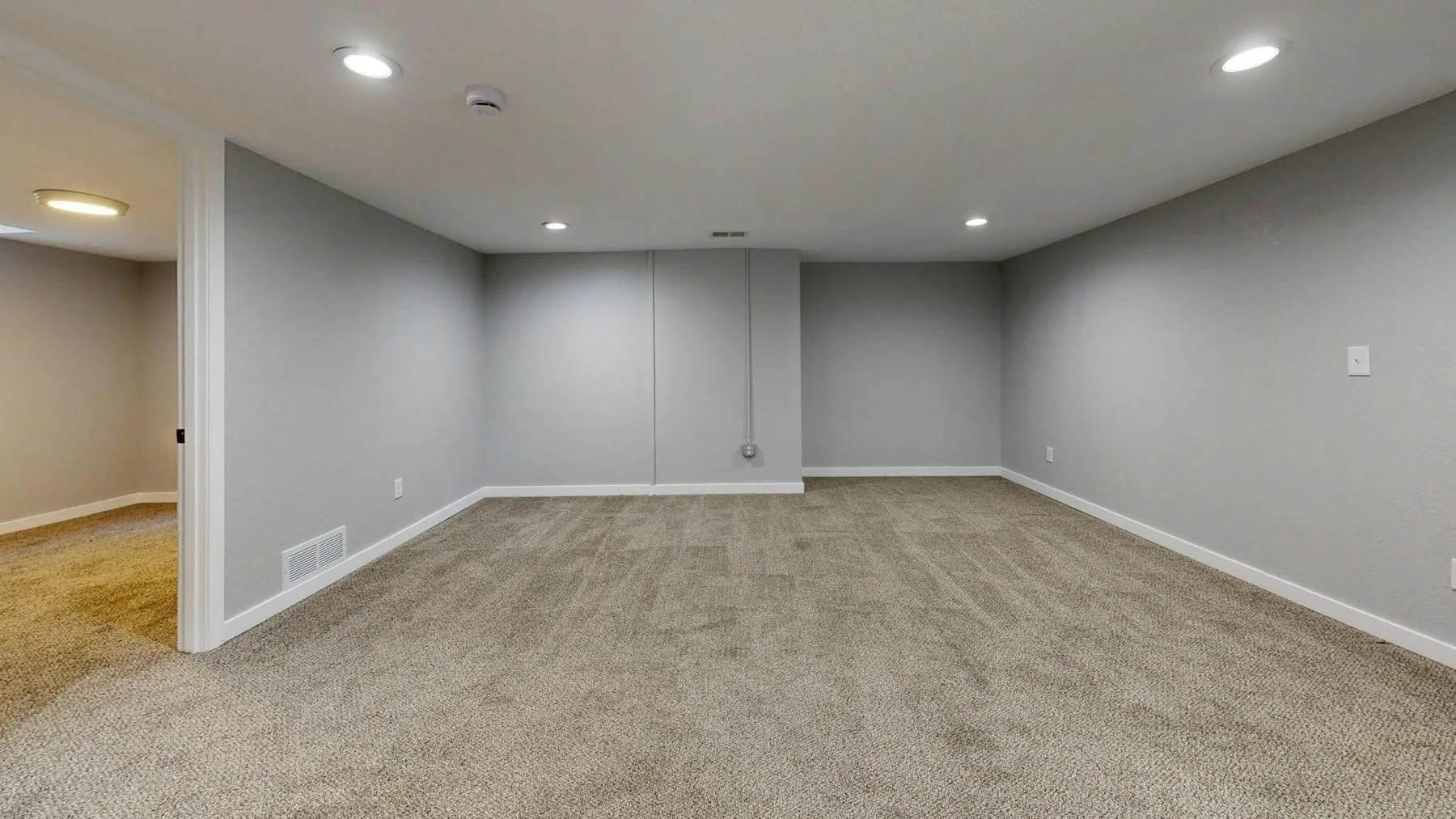
Two-family and single-family basements — subject to NYC ceiling-height code and egress requirements. We confirm what is permitable on the consultation. In-law suites, family rooms, and accessory dwelling unit conversions handled in scope.
-
Home additions
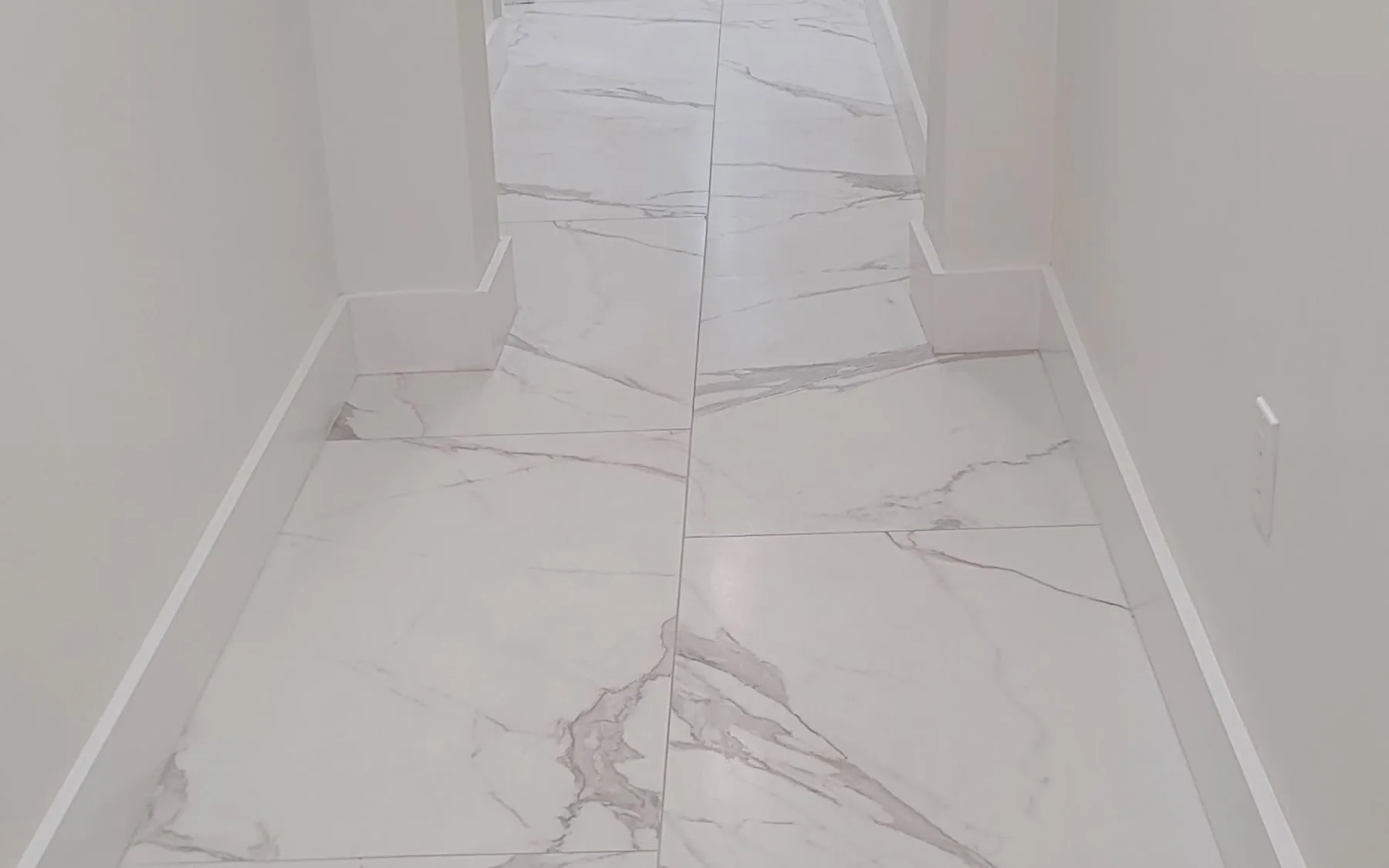
Single-family bump-outs and dormers where lot setbacks allow, second-story add-ons on detached stock, and rear-yard extensions on the larger Queens lots. NYC DOB filing and zoning check come first.
Materials & Standards
Six standards. No shortcuts.
What holds a Queens remodel together is the part nobody photographs — the waterproofing under tile, the membrane behind a feature wall, the pressure-tested supply line in a mid-century plaster wall. Same standard on a single bath in a garden apartment or a two-family parallel-unit gut.
-
Waterproofing.
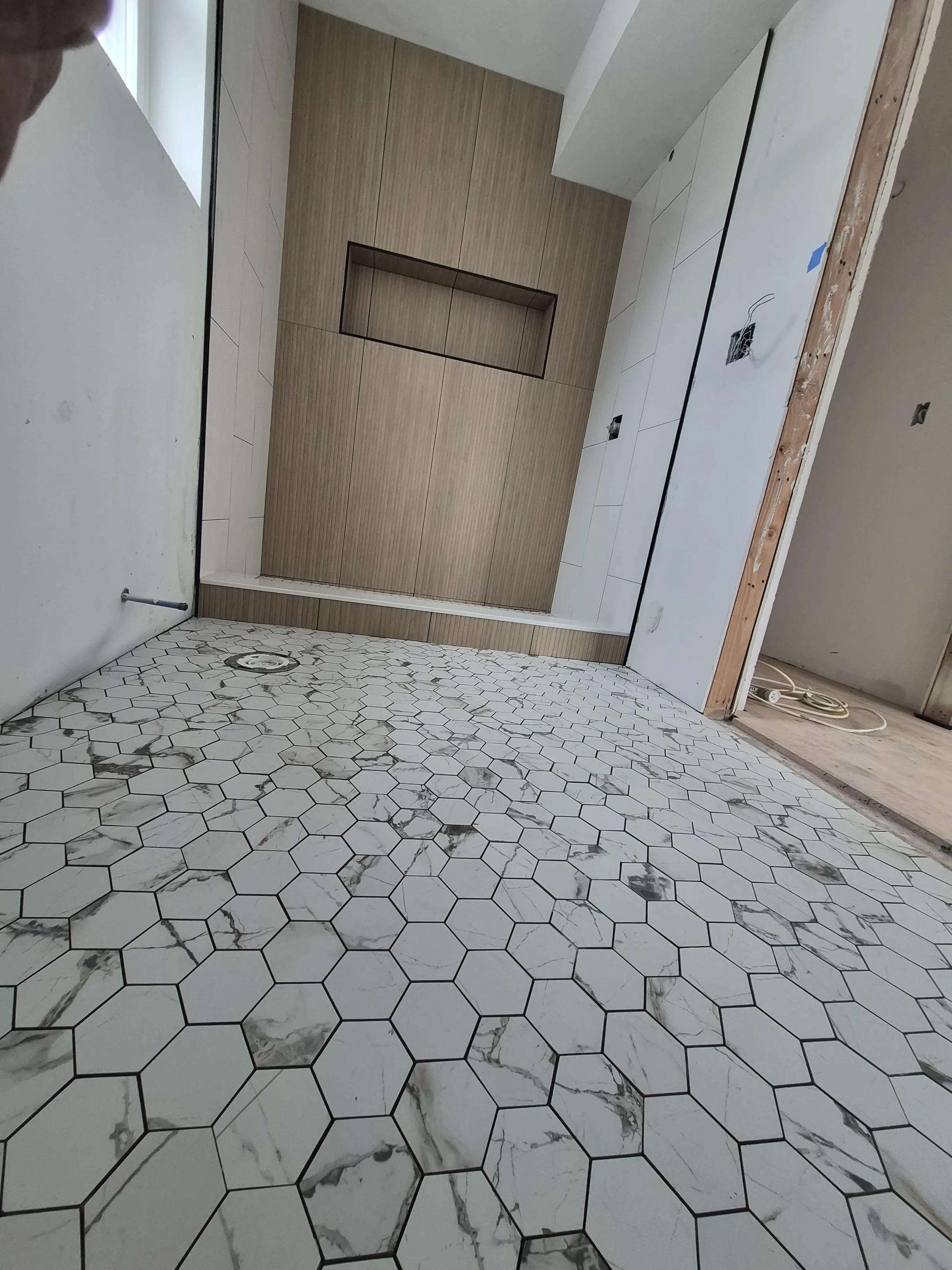
Schluter or RedGard membrane on every wet wall and shower floor. Pan slope verified before tile. Linear, point, or trough drains — same standard, no exceptions. Critical in mid-century Queens stock where the original cast-iron drains and the basement below have their own moisture history.
-
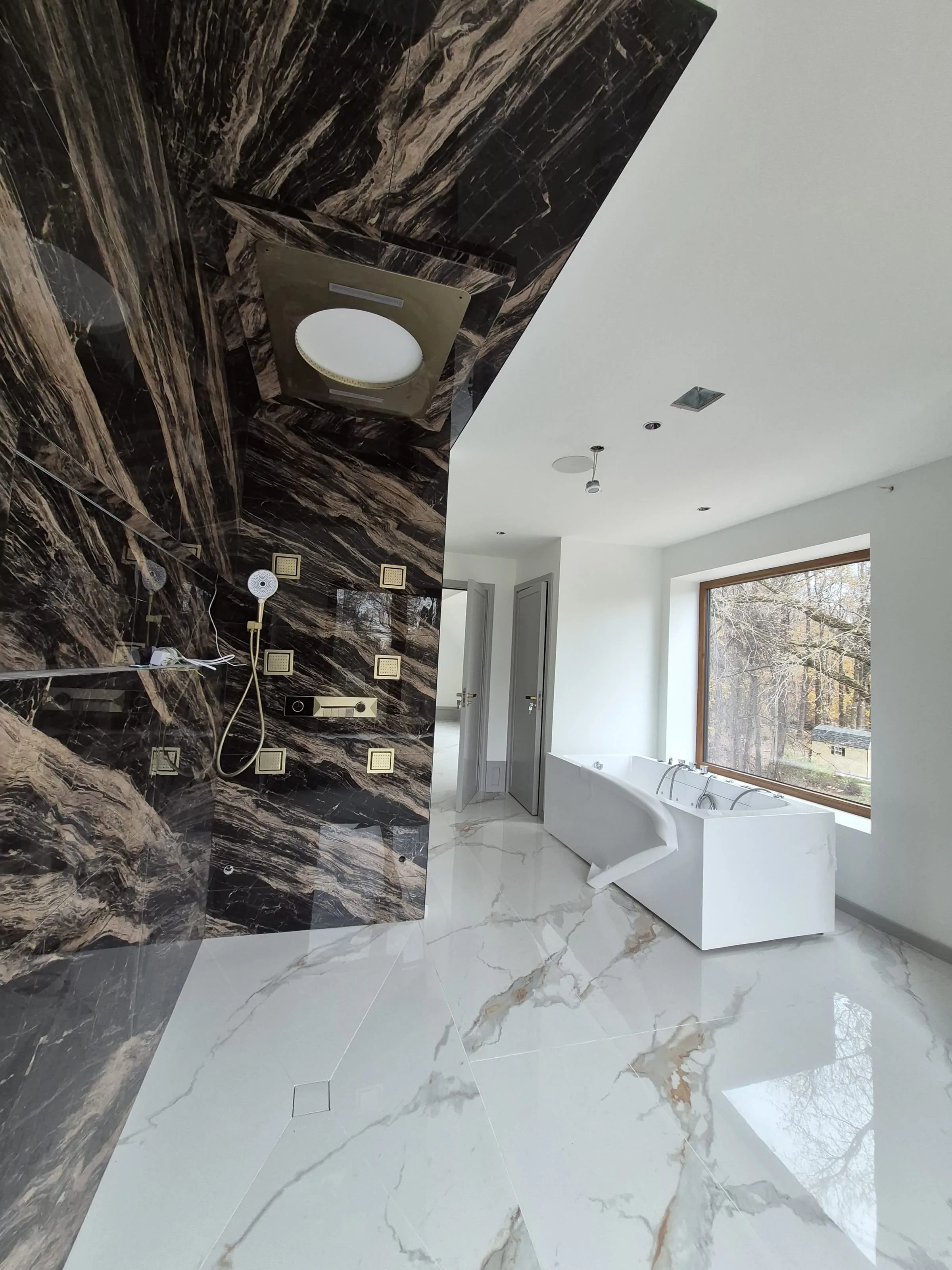
Tile.
Dry-laid mockup before adhesive. Mitred outside corners on natural stone. Hand-laid mosaic feature walls. Grout color confirmed against a wet sample before bagging.
-
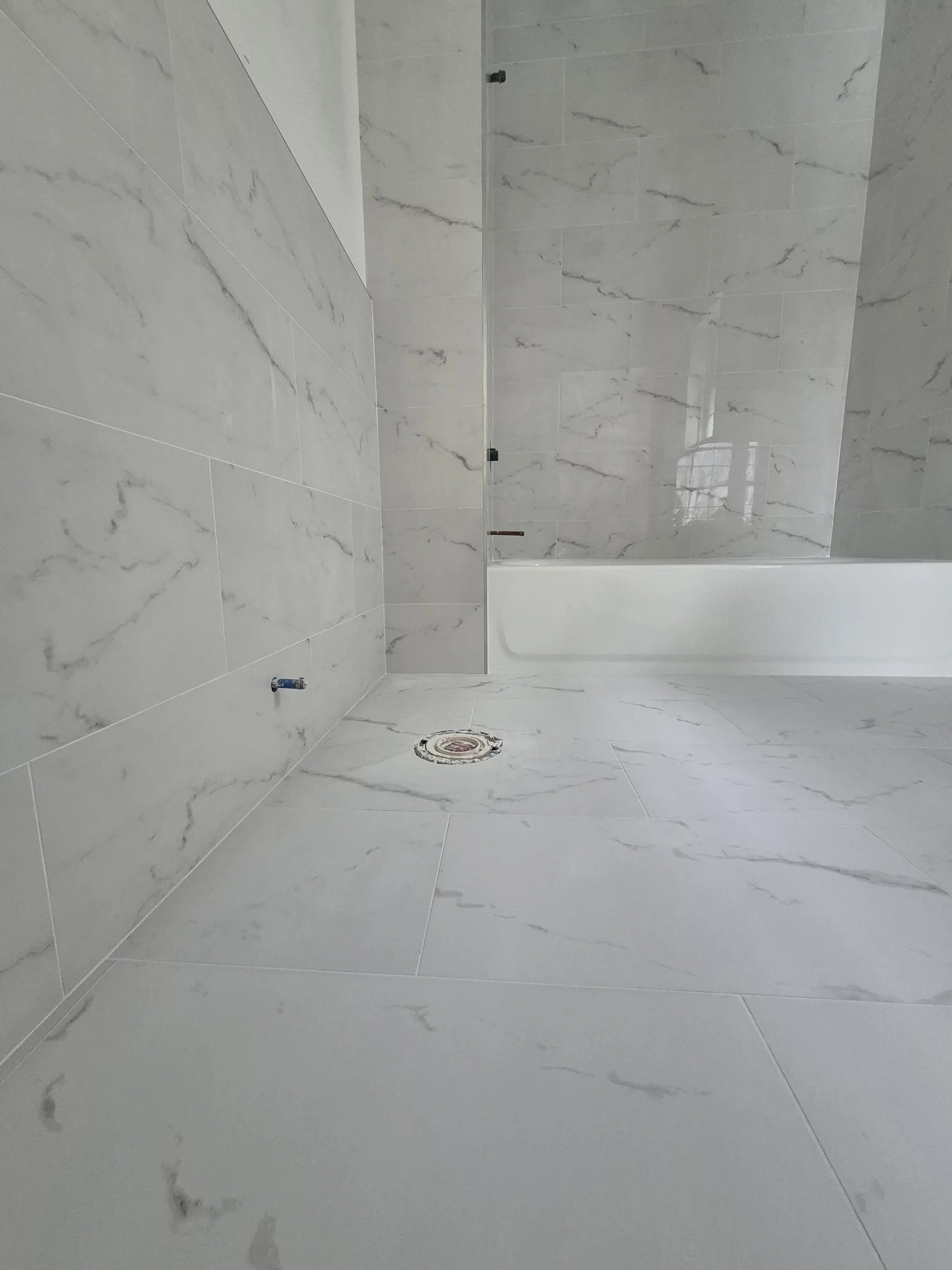
Stone.
Calacatta, Carrara, statuario slab. Bookmatched walls and waterfall vanities templated on site. Edge profiles mocked up in MDF before fabrication. Slab orientation marked before delivery.
-
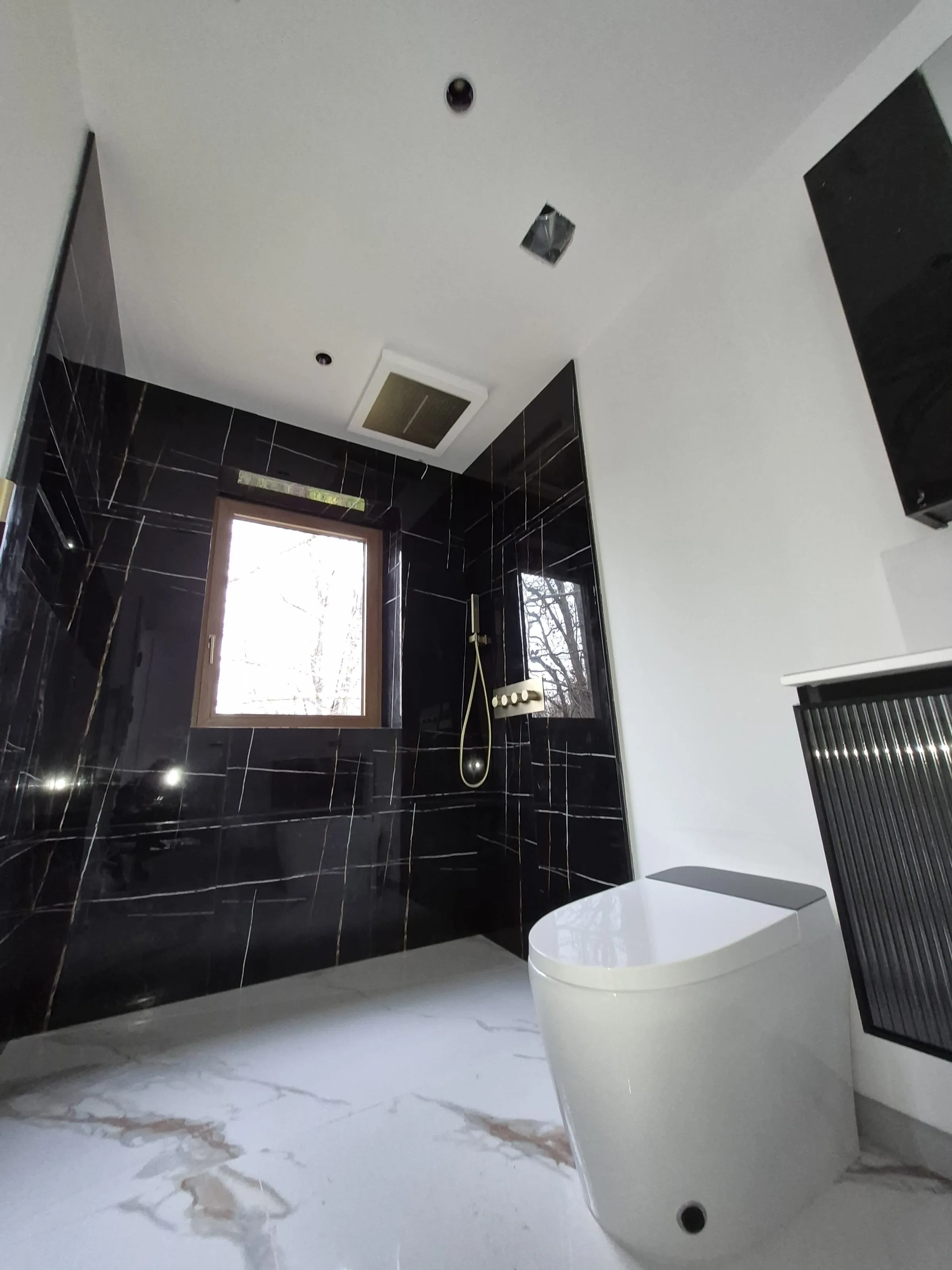
Fixtures.
Brass and bronze supply lines, pressure-tested before walls close. Premium valves, thermostatic shower controls, and smart-shower diverters — installed to manufacturer spec. NYC DOB-compliant plumbing throughout.
-
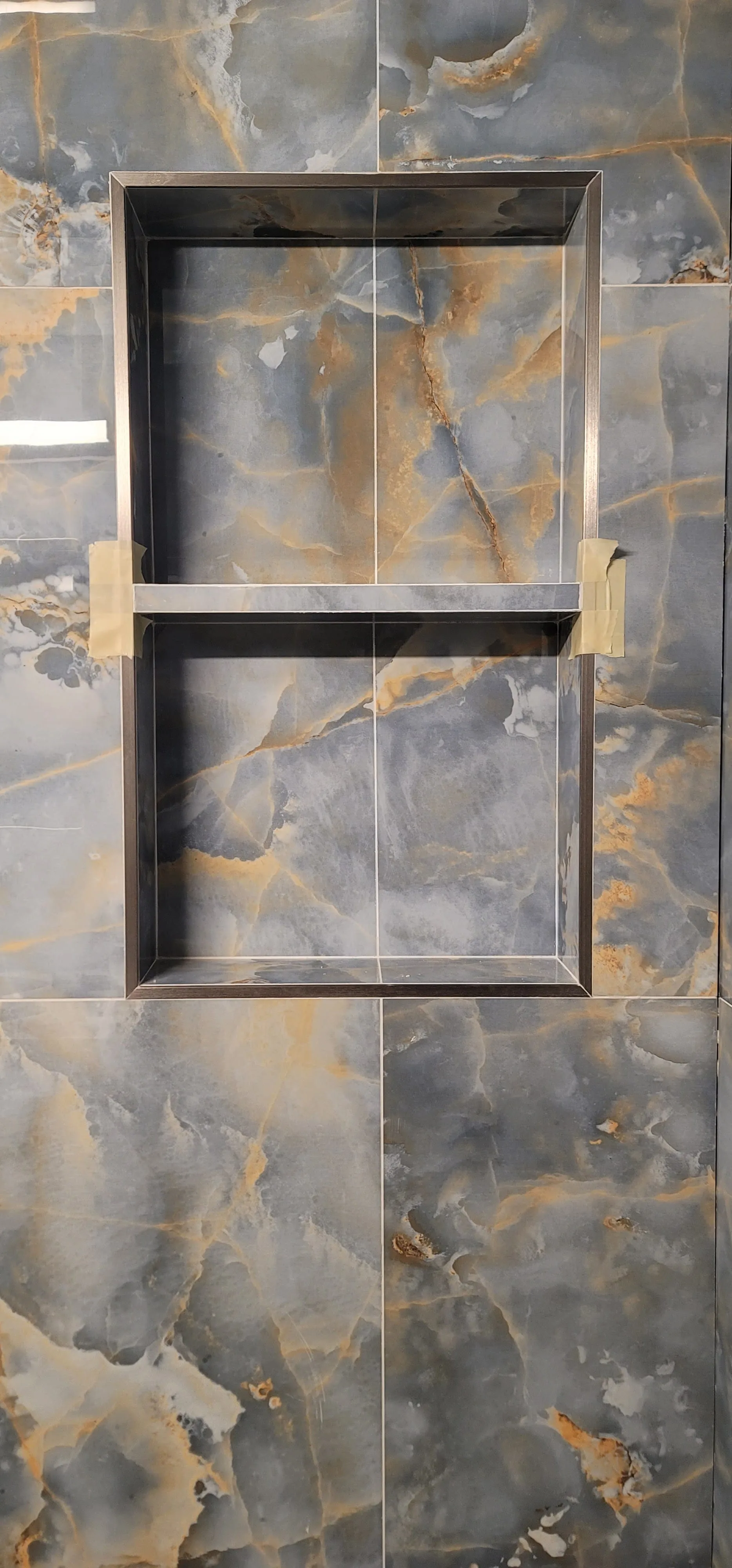
Glass & feature walls.
Frameless shower enclosures, low-iron clear glass, mitred outside corners — nothing thinner than 3/8". Lit niche details and bookmatched feature walls planned in framing, not bolted on after tile.
-
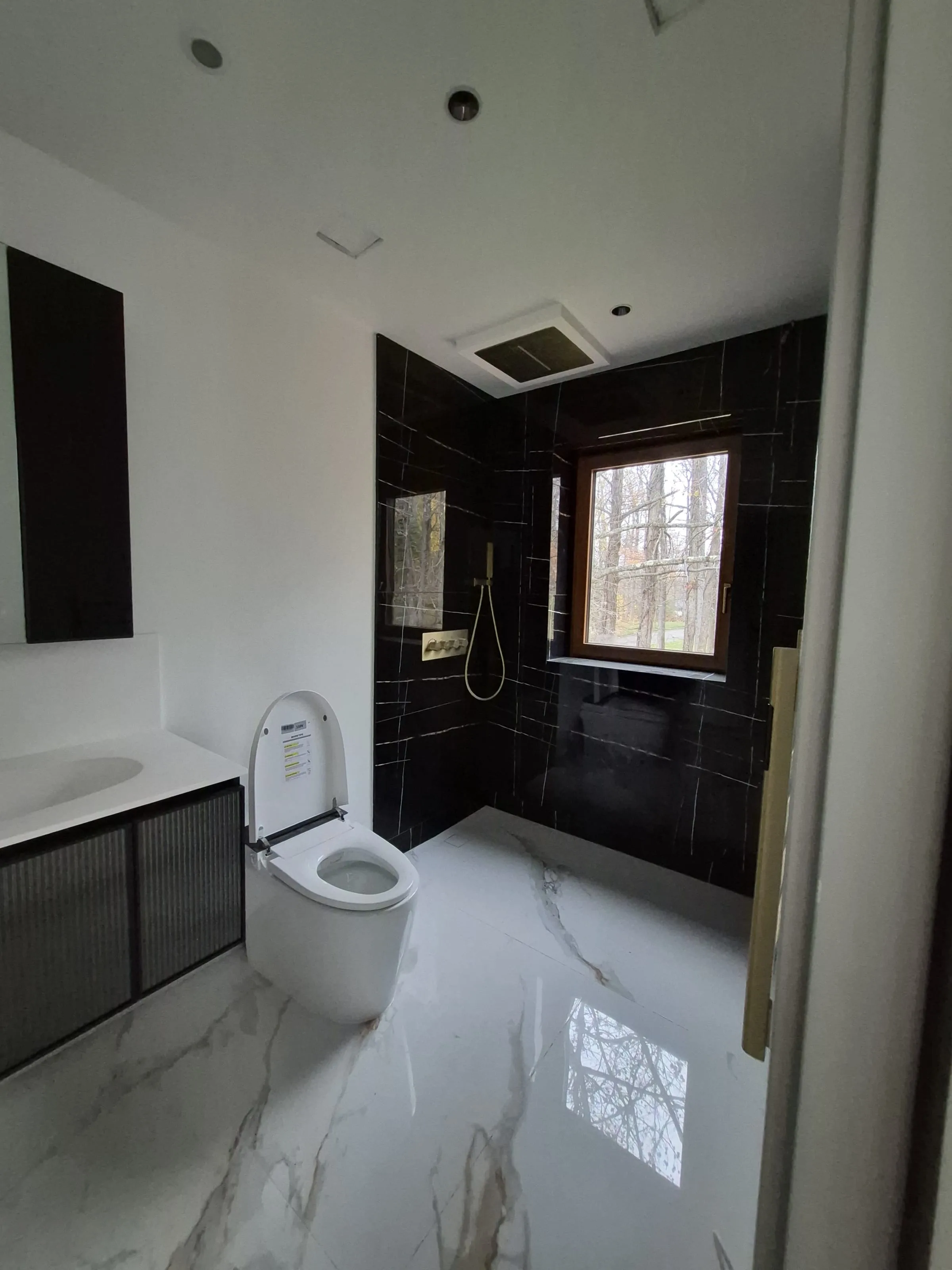
Smart-home & lighting.
Heated electric or hydronic floors, app-controlled shower valves, pre-wired smart mirrors, motion-sensor niche lighting, integrated audio. Roughed in during framing, never after tile.
Process
Four steps. No surprises.
Same four-step process as every project. Queens uses the same NYC Department of Buildings as Manhattan, Brooklyn, the Bronx, and Staten Island — same filing process, same inspection workflow. Co-op alteration agreements typically run 2 to 4 weeks (lighter than upper-tier Manhattan); two-family and single-family work runs DOB-direct under our license. We sequence approvals in parallel so demo starts the day the package lands.
-
Free consultation
On site or by video. We measure, photograph the existing space, and walk through scope. Same-day response on most inquiries.
-
Design and scope
Drawings, finish selections in three tiers, and a written line-item proposal. You see exactly what’s in and what’s out before you sign.
-
Build
Floor protection in place before tools arrive, dust barriers up before demo. In-house tile and stone setters, trusted licensed plumbers, daily clean-down.
-
Walk-through and warranty
Final punch, deep clean, and the 2-year written workmanship warranty. Pass-through manufacturer warranties on tile, fixtures, and cabinetry.
Featured Projects
Recent Queens builds. Built to last.
A couple of recent Queens builds — two-family and single-family stock representative of the borough's diverse housing mix. Each links to a fuller case study with the permit timeline, materials list, and build sequence.
Service Areas
Where we build.
We’re based in Newark, NJ, and we work across the NYC metro from there. Five boroughs, Long Island, Yonkers, and northern New Jersey are all on the standard route.
And 30+ surrounding cities within a 50-mile radius of Newark, NJ
FAQs
Queens-specific questions.
Two-family permitting, NYC DOB filings, co-op alteration agreements lighter than Manhattan, garden-apartment material delivery, basement code review, and owner-occupied two-family rental coordination — the things that actually decide how a Queens remodel runs.
What types of Queens projects do you do most often?
Bathroom and kitchen remodels in two-family duplexes and single-family homes are the most common Queens projects, followed by full-floor renovations in multi-family buildings. Apartment renovations in mid-century co-ops and modern condos along the East River waterfront are also regular work. The Queens portfolio tilts more toward owner-occupied two-family and single-family housing than the Manhattan portfolio does.
Do you work on two-family duplexes in Queens?
Yes — two-family work is a substantial share of the Queens portfolio. Two-family layouts allow for in-law suite work permitted as accessory living space, basement-conversion to legal habitable space (subject to ceiling height and egress code), and parallel renovations of both units when both tenants/owners agree. We coordinate with both tenants and handle the permitting under the homeowner's name.
Are co-ops in Queens different from co-ops in Manhattan?
Generally yes — Queens co-ops are typically less governance-heavy than Manhattan co-ops. Alteration agreements are still standard, but approval cycles tend to be shorter, COI limit requirements often lower ($1M/$2M is more common than $5M), and freight elevator scheduling less of a constraint. That said, every building has its own rules — we ask for the building handbook on the consultation regardless of borough.
Do you work in Queens condos and apartments?
Yes. Queens has a wide condo and rental-conversion stock, particularly along the East River waterfront and in modern post-2000 buildings. Governance varies — some condos are nearly as strict as Manhattan high-end, some are quite light. We confirm building rules during the consultation.
Can you remodel a Queens apartment with a basement-level access?
Yes. Garden apartments — co-ops where the unit has a basement or sub-grade level — are common in mid-century Queens stock. Below-grade space can sometimes be remodeled (subject to ceiling-height code and egress requirements), and ground-level units often have street-level access that simplifies material delivery vs. a high-rise freight elevator. We assess code compliance for any below-grade habitable work during the design phase.
How long is the drive from Newark to Queens?
About 35 to 60 minutes door-to-door, depending on destination and traffic. Queens routing typically goes through Manhattan (Holland Tunnel + Queensboro Bridge / Williamsburg Bridge) or via the GW Bridge and Cross Bronx. Western Queens (closer to the East River) is faster; eastern Queens (closer to Long Island) is slower.
Do you handle DOB filings for Queens?
Yes. Queens uses the same NYC Department of Buildings as Manhattan, Brooklyn, the Bronx, and Staten Island — same filing process, same inspection workflow. NYC HIC and DOB permits are filed by our long-term NY-licensed master plumber and electrician partners under their licenses; we manage the consultation, scope, COI, scheduling, build, inspections, and close-out as the NJ-licensed design-build contractor of record.
Can you work with the Queens single-family or two-family rental portion?
Yes — we work with owner-occupied two-family homes regularly. If you own a two-family and rent the other unit, we coordinate work timing with both you and your tenant where possible, post the legally-required notice to the tenant before any disruptive work, and respect tenant privacy and use-of-space throughout the project. We don't work directly for tenants — homeowner of record is the contracting party.
Project intake