Master baths
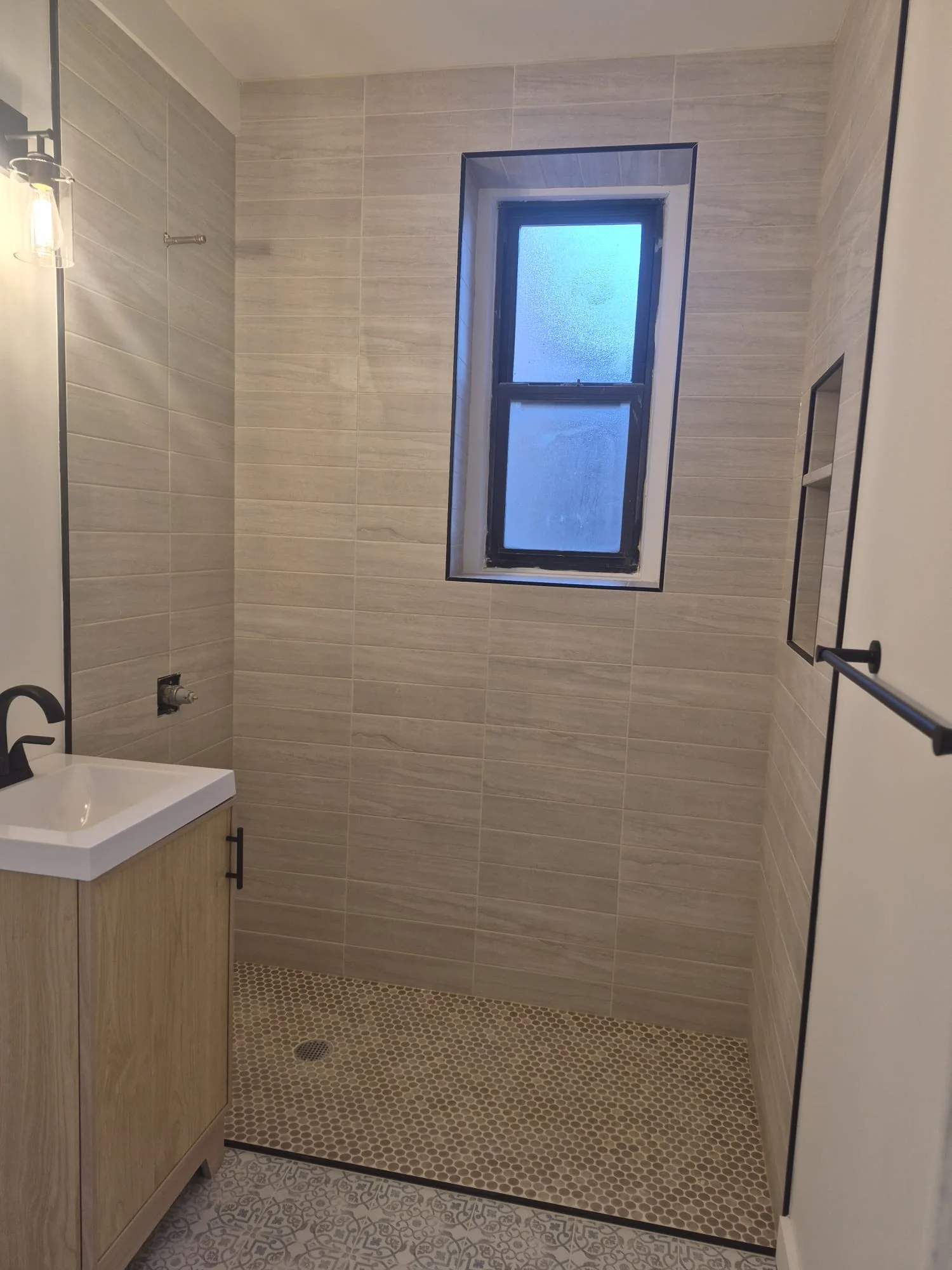
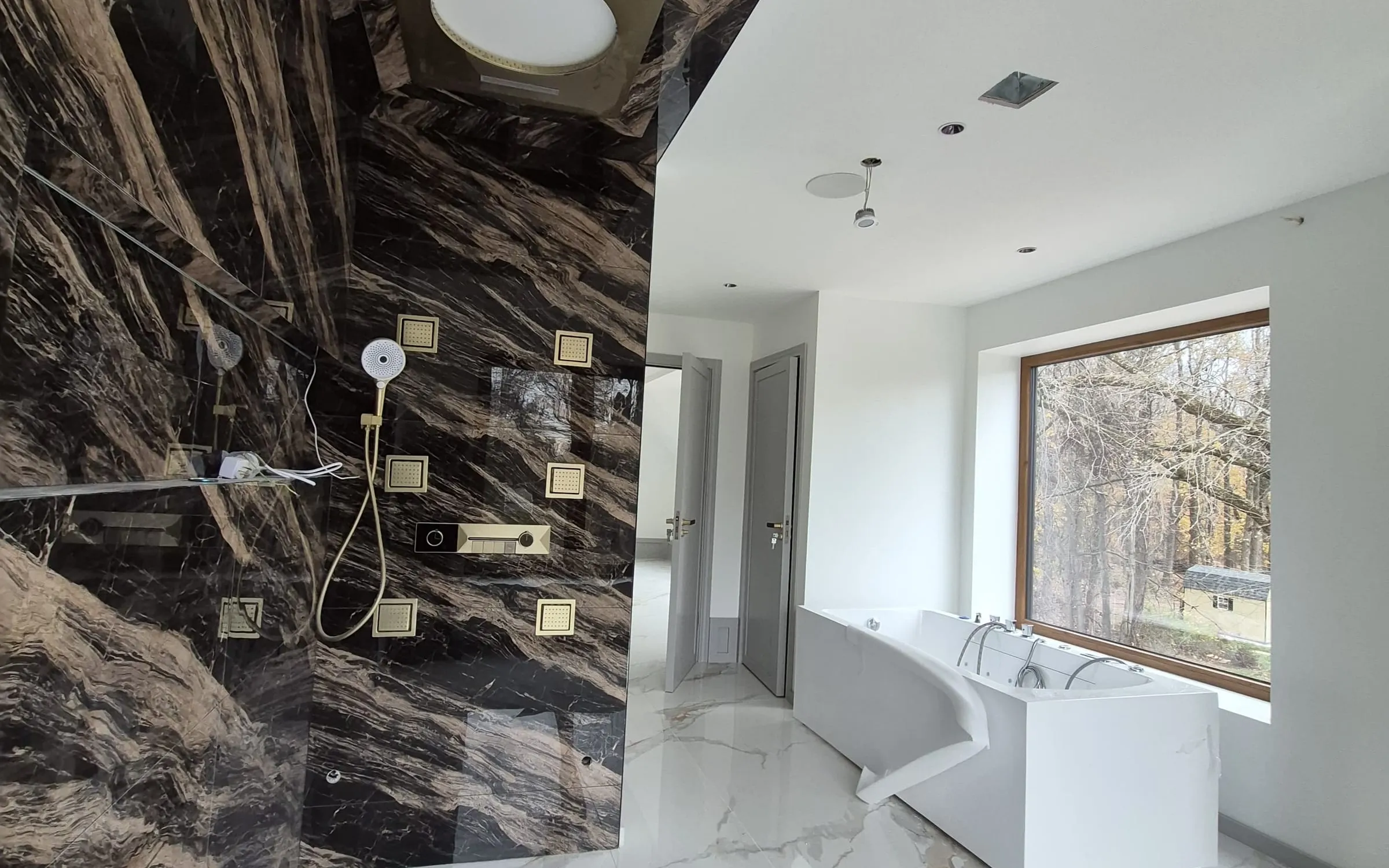
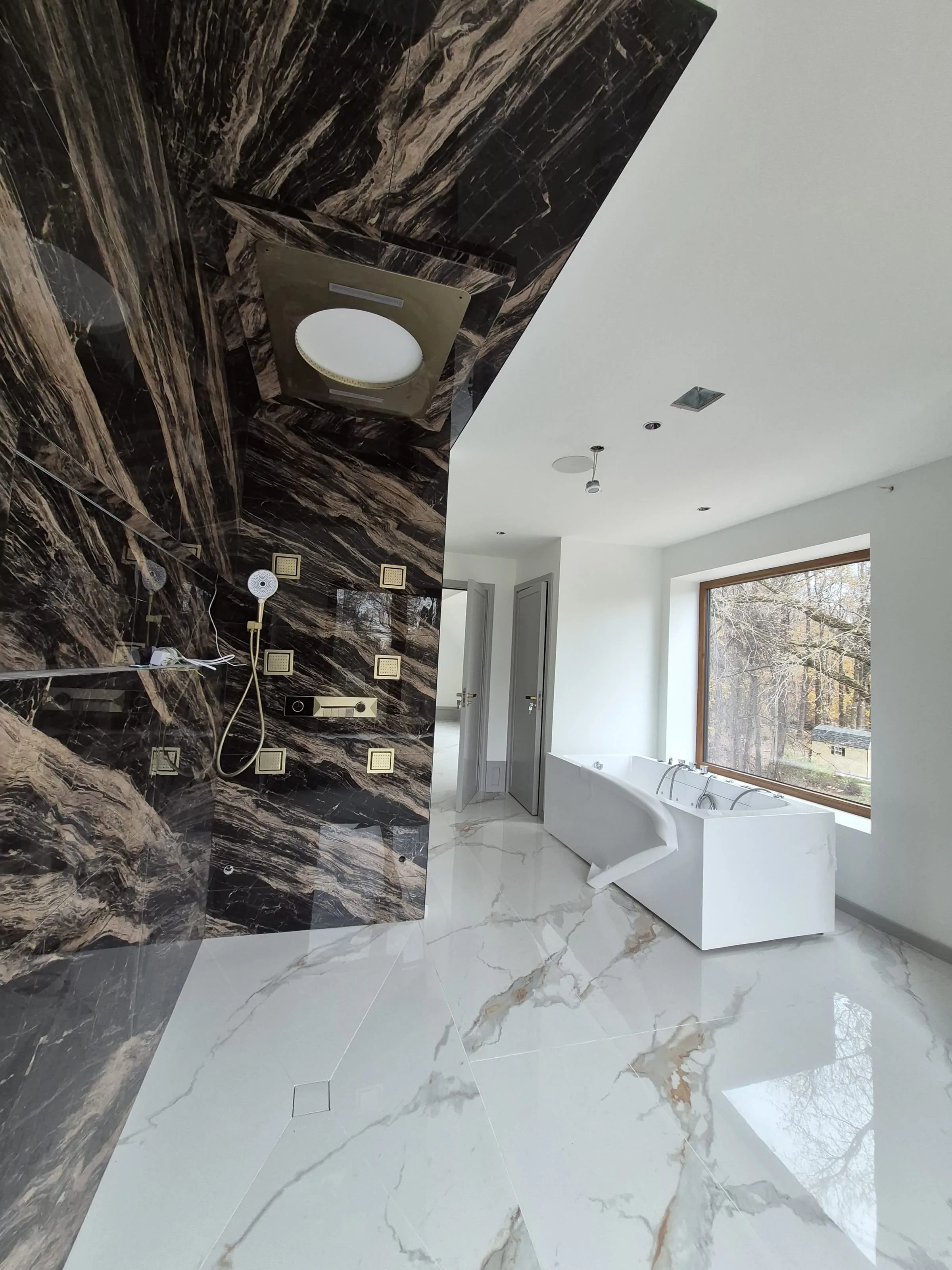
Full primary suites with double vanities, walk-in showers, freestanding tubs, separate water closets, and custom storage built into the framing. Slab vanities, bookmatched walls, and heated floors are standard upgrade paths.
Pre-war co-ops, post-war condos, brownstones, and high-rise apartments — single bath, primary bath, and two-bath gut renovations across Manhattan. Alteration agreements, DOB filings, freight elevator logistics, and wet-over-dry coordination handled under our license.
What we build
Master suites to powder rooms — same waterproofing, same plumbing rough-in, same tile-set quality. The size of the project changes how long it takes; it doesn't change how it gets built.
Full primary suites with double vanities, walk-in showers, freestanding tubs, separate water closets, and custom storage built into the framing. Slab vanities, bookmatched walls, and heated floors are standard upgrade paths.
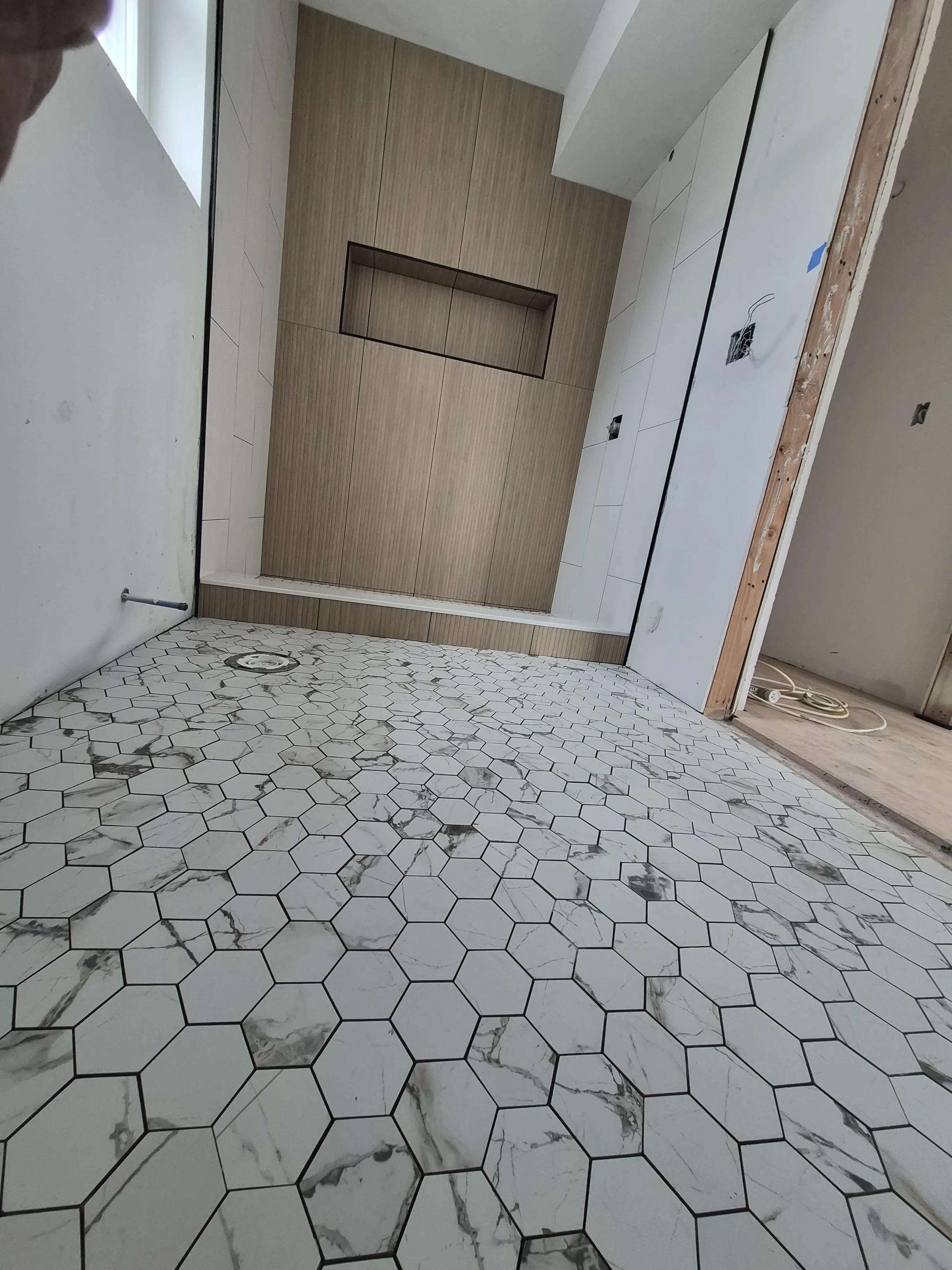
Curbless walk-in showers with linear drains. Frameless glass enclosures. Wet-room builds with a single waterproofed zone. Built-in benches, recessed niches, and dual shower heads coordinated with the rough-in.
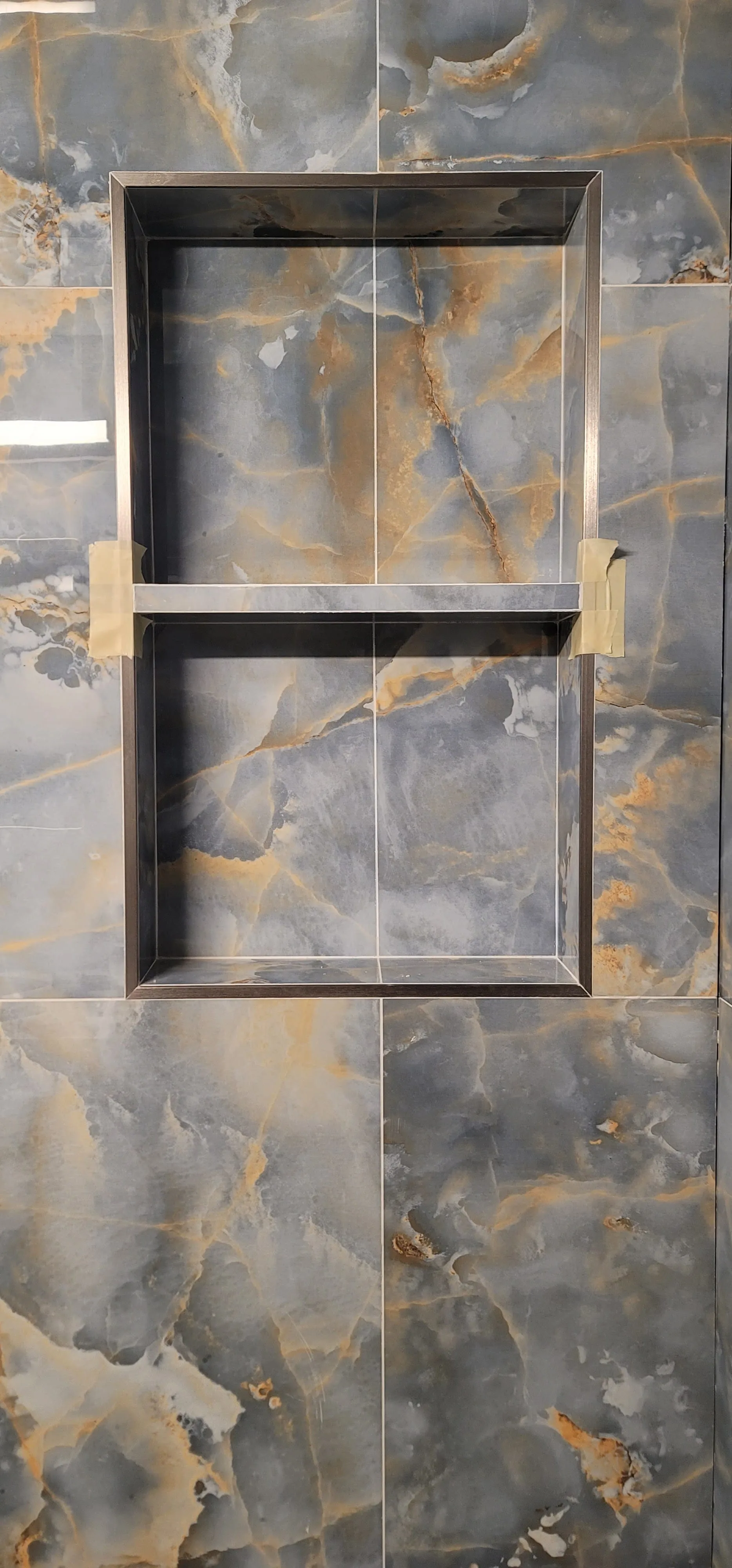
Compact, high-impact builds. Statement vanities, hand-laid feature walls, sconce lighting, and the kind of fixtures you don’t put in a kid’s bathroom. Powder rooms are where you stop being polite about finish materials.
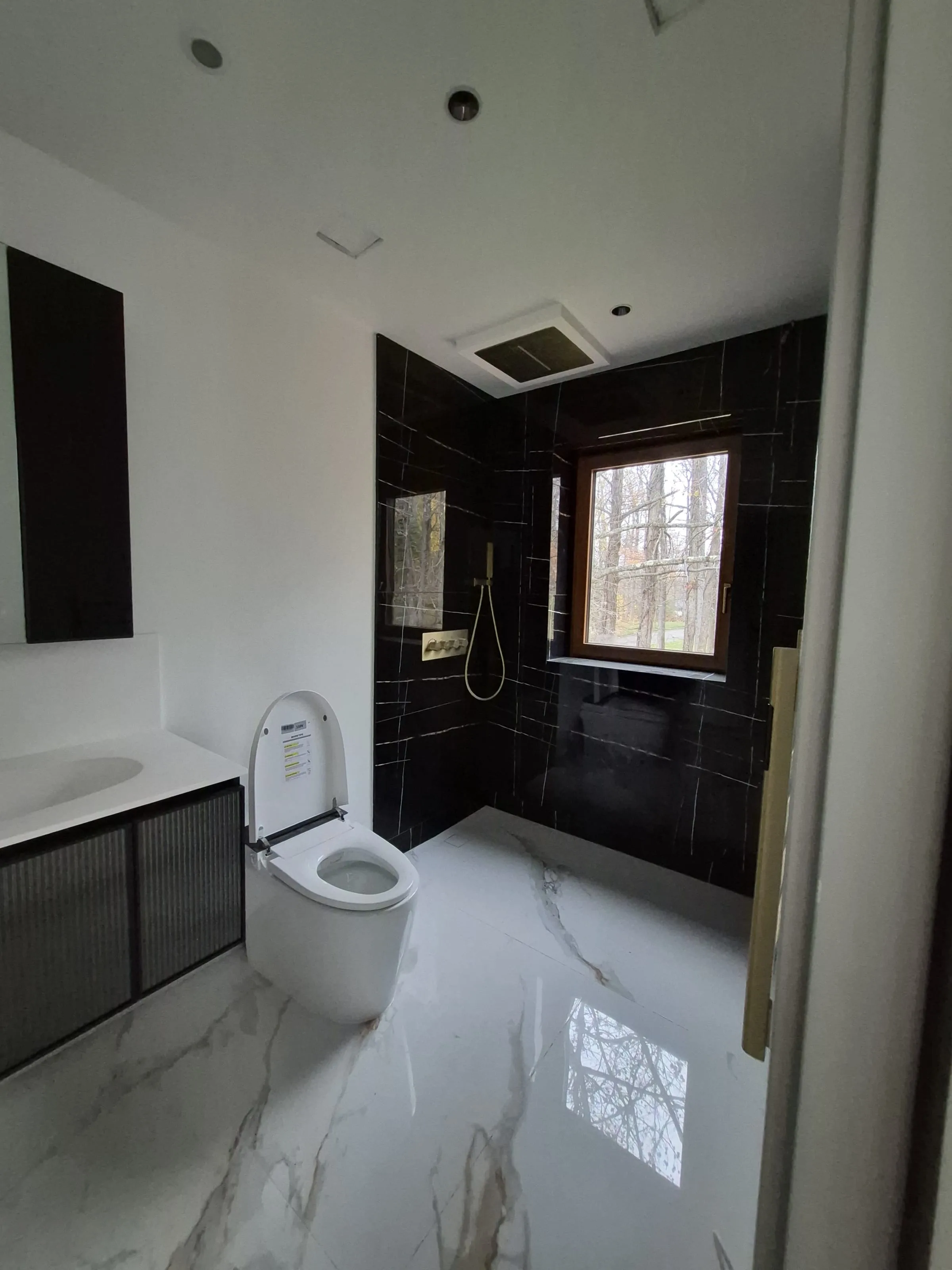
Heated floors, app-controlled shower valves, pre-wired smart mirrors, automatic-flush toilets, motion-sensor niche lighting, and integrated audio. Roughed in during framing — never bolted on after tile.
Materials & Standards
The unsexy part of a bathroom remodel is what holds it together. We don’t compromise on it — the standard runs the same on a vanity replacement and a primary suite.
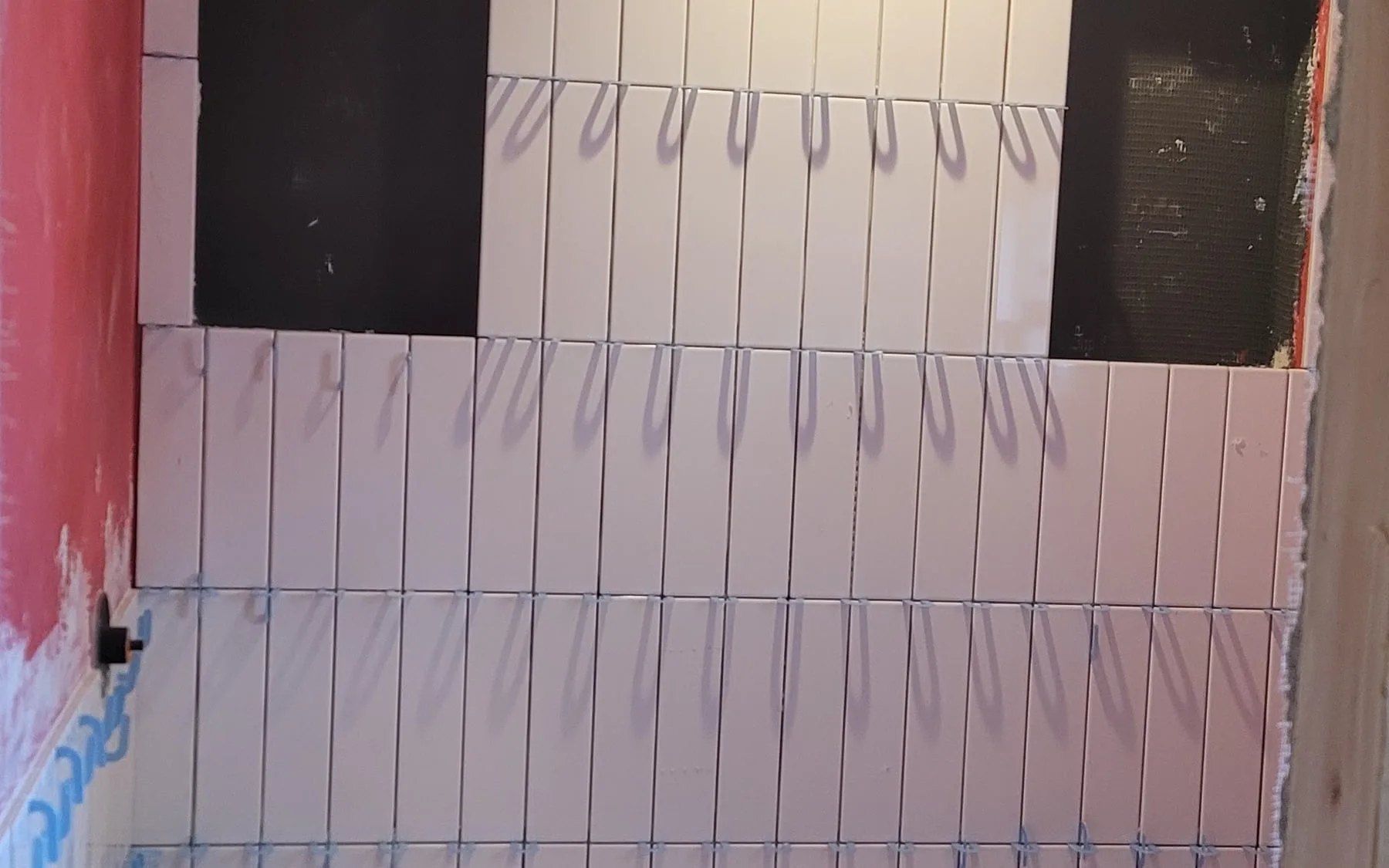
Schluter or RedGard membrane on every wet wall and shower floor. Pan slope verified before tile. Linear, point, or trough drains — same standard, no exceptions.
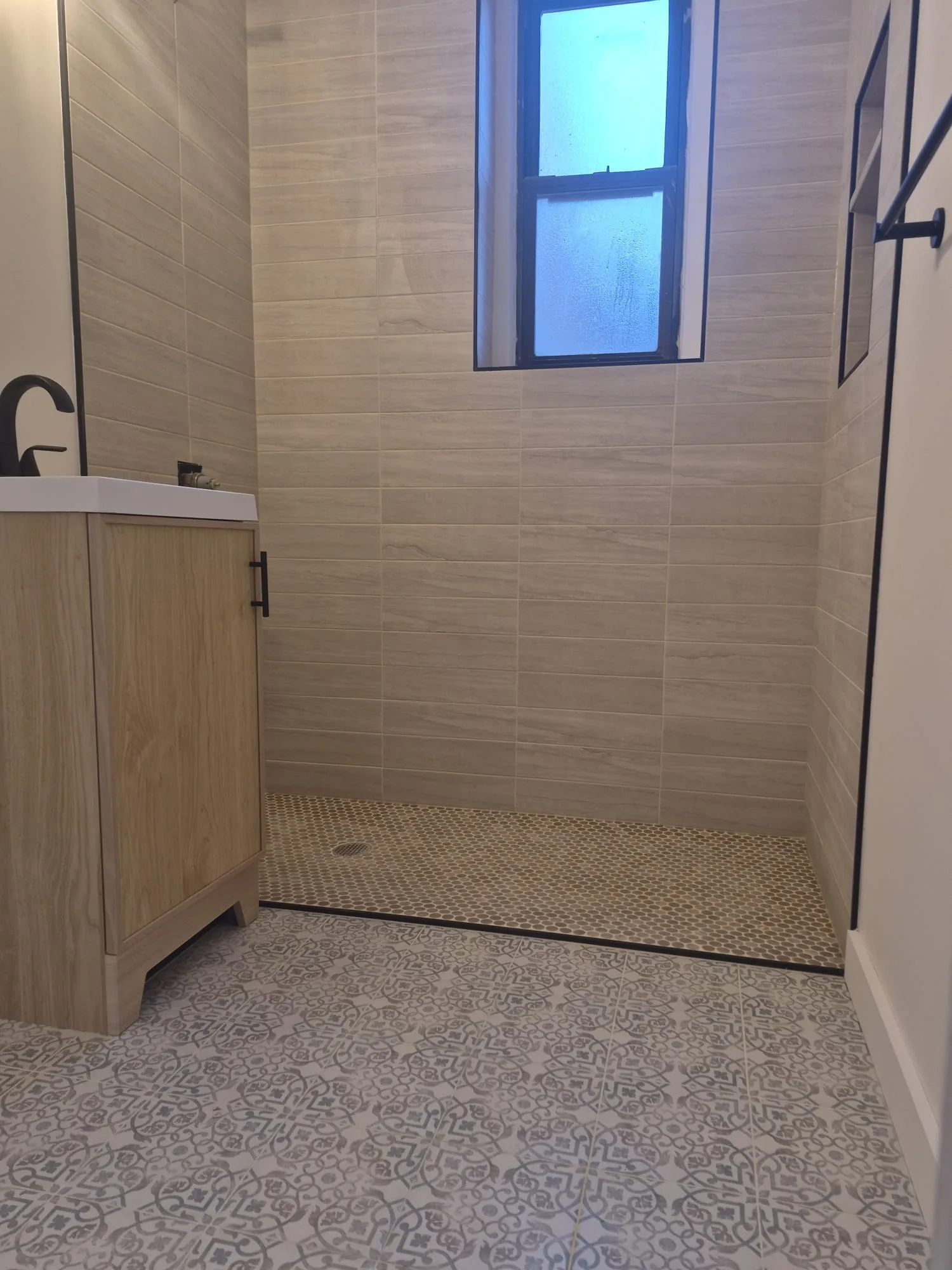
Dry-laid mockup before adhesive. Mitred outside corners on natural stone. Hand-laid mosaic feature walls. Grout color confirmed against a wet sample before bagging.
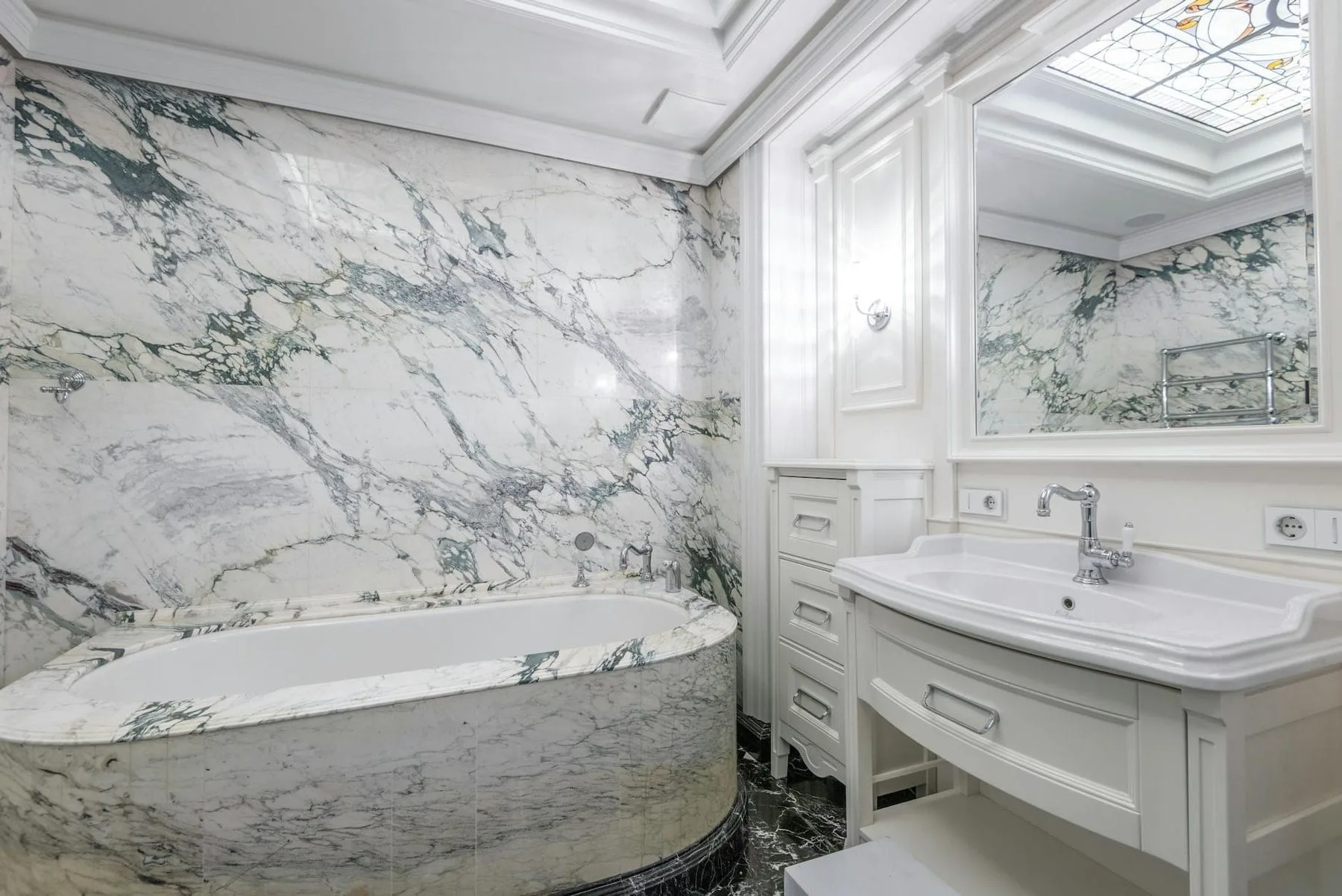
Calacatta, Carrara, statuario slab. Bookmatched walls and waterfall vanities templated on site. Edge profiles mocked up in MDF before fabrication.
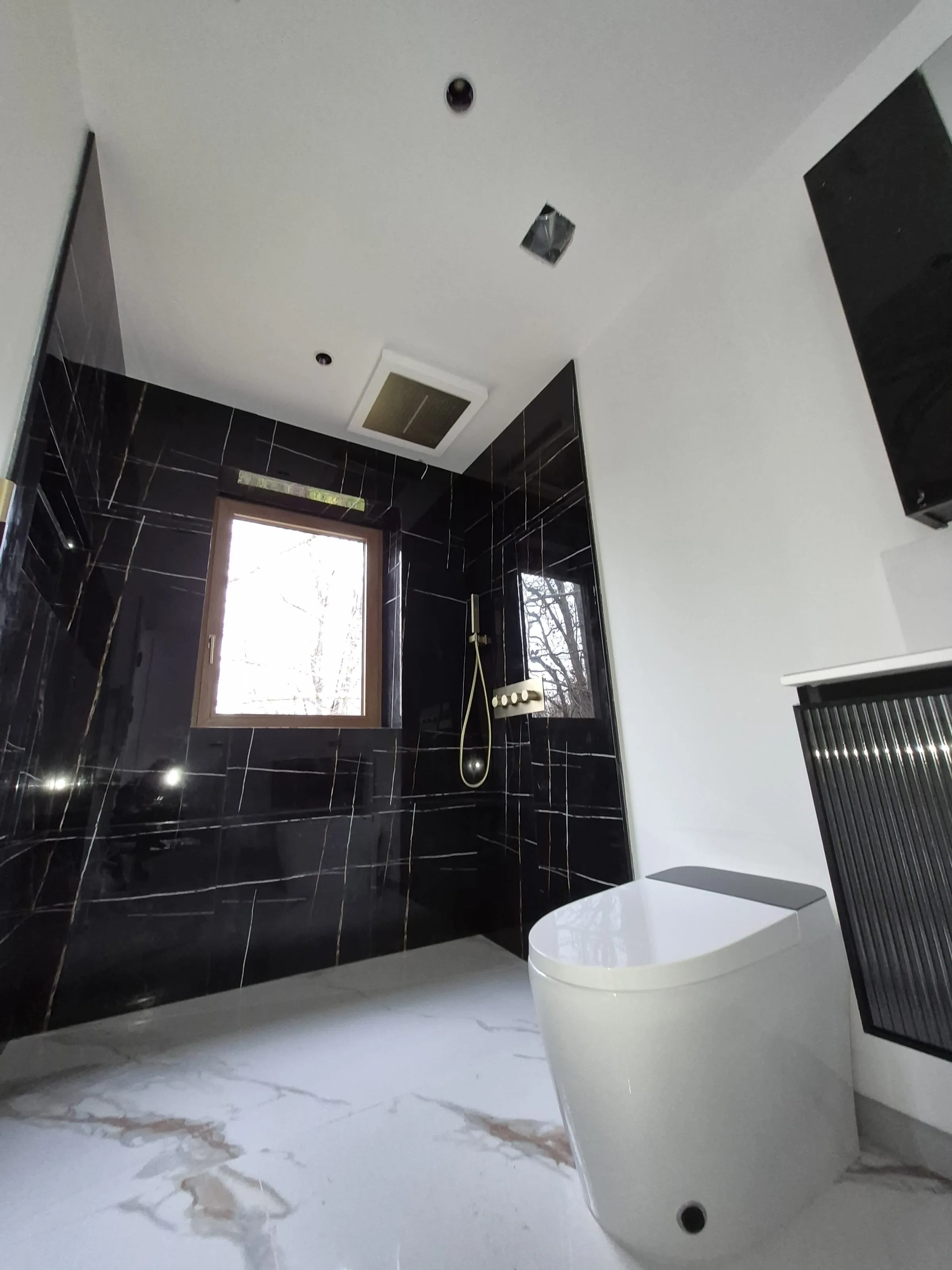
Brass and bronze supply lines, pressure-tested before walls close. Premium valves, thermostatic shower controls, and smart-shower diverters — installed to manufacturer spec.
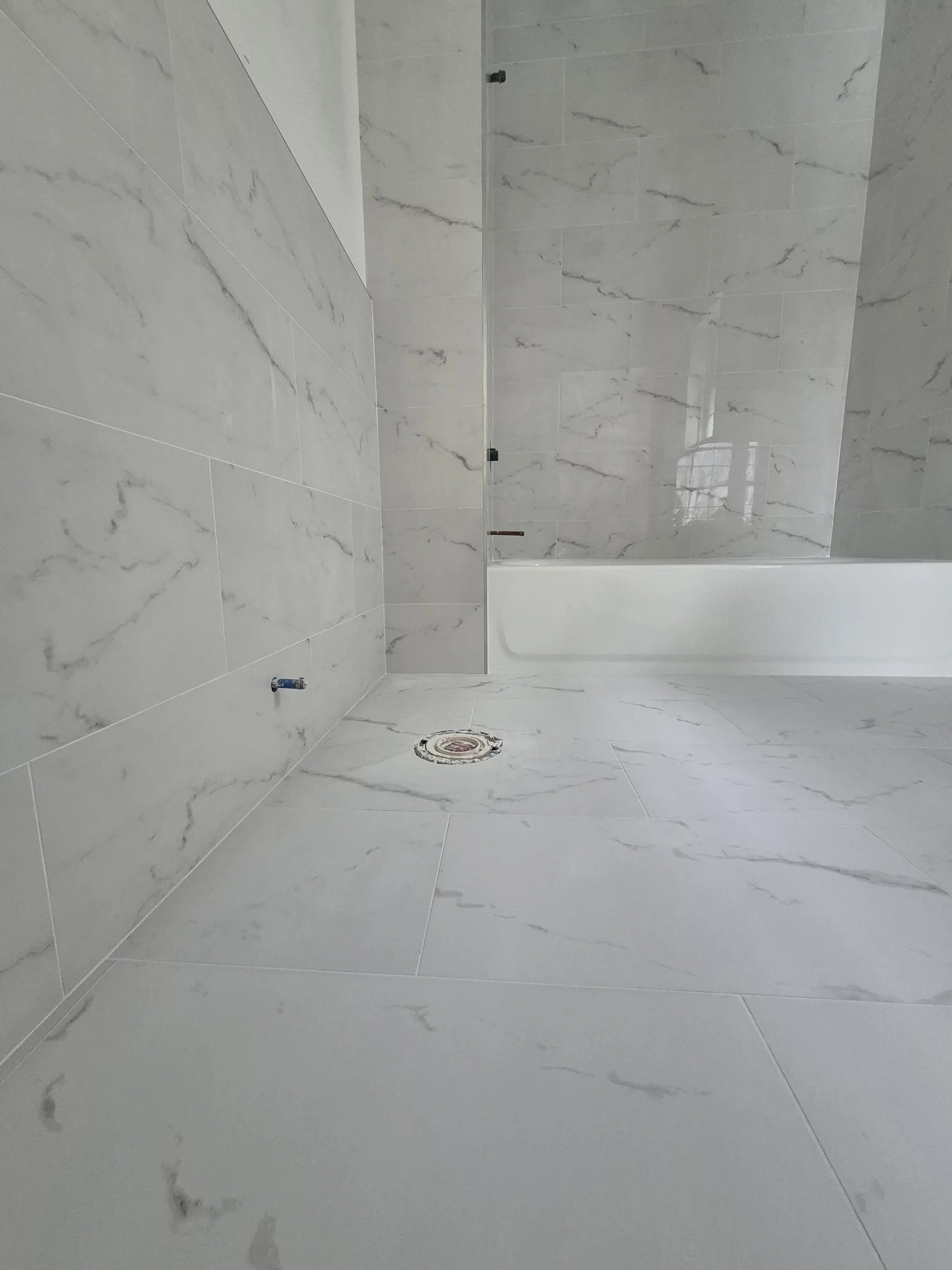
Frameless shower enclosures, low-iron clear glass, mitred outside corners. Steam-shower glass with the right transom and seal package. Nothing thinner than 3/8".
Heated electric or hydronic floors, app-controlled shower valves, pre-wired smart mirrors, motion-sensor niche lighting, integrated audio. Roughed in during framing.
Process
Same four-step process across every Manhattan bathroom build. Two timelines run in parallel: the building alteration agreement plus DOB plumbing or construction filing (typically 4 to 10 weeks of pre-build approval), and the build itself. We coordinate the filings with our NY-licensed trade partners, manage every COI, and close out every inspection.
On site or by video. We measure, photograph the existing space, walk through scope, and confirm the building type — pre-war co-op, post-war condo, brownstone, or high-rise — and the wet-over-dry constraints that govern layout.
Drawings, finish selections in three tiers, and a written line-item proposal. Alteration agreement package filed with the building. DOB plumbing or construction filing pulled by our expediter where required.
Lobby and elevator protection in place before tools arrive, dust barriers up before demo. In-house tile and stone setters, NY-licensed master plumber on every plumbing rough, NY-licensed electrician on every electrical rough, freight scheduled to building rules, daily clean-down to building standard.
Final punch, deep clean, DOB sign-off, alteration agreement close-out, and the 2-year written workmanship warranty. Pass-through manufacturer warranties on tile, fixtures, and cabinetry.
Featured Projects
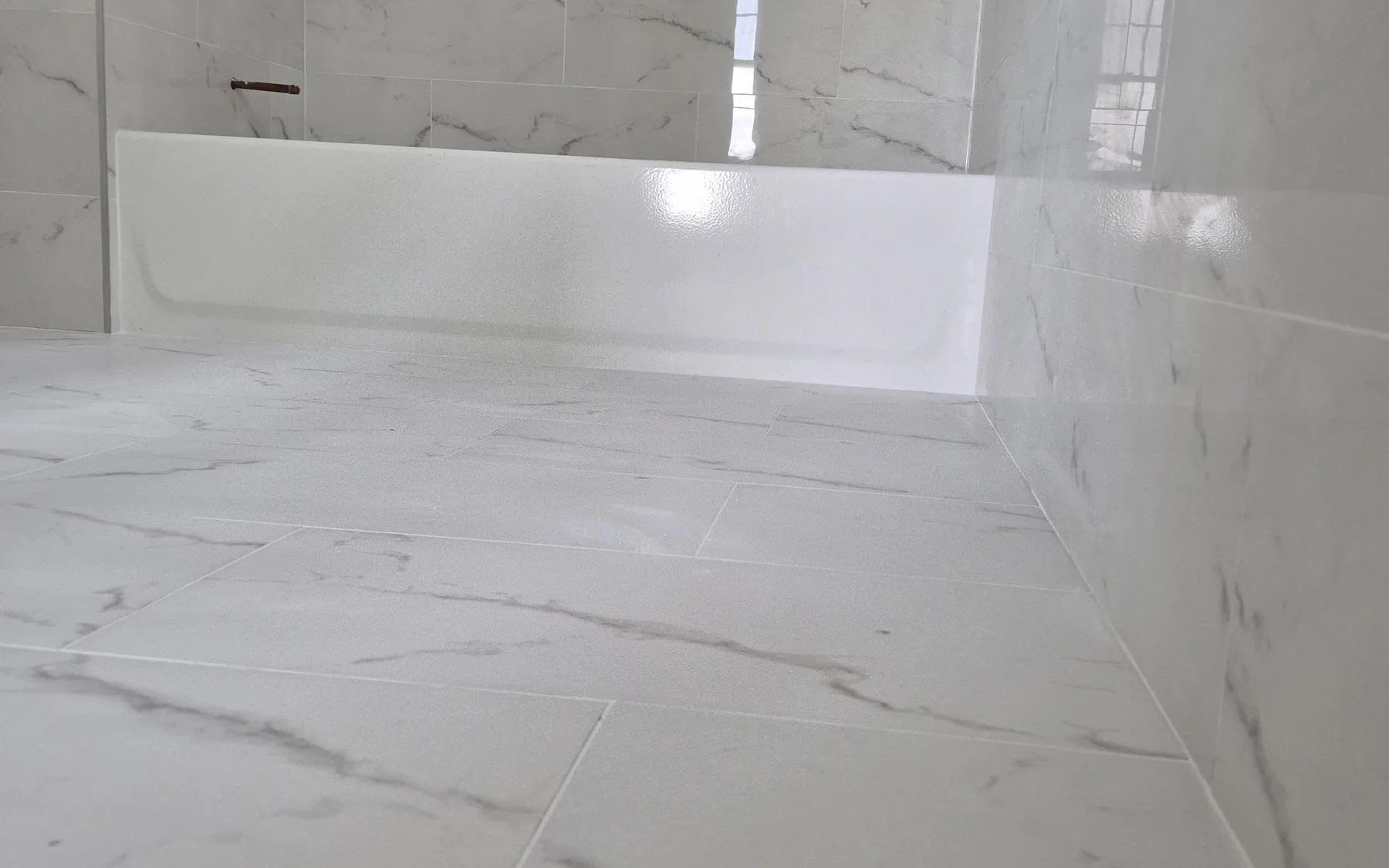
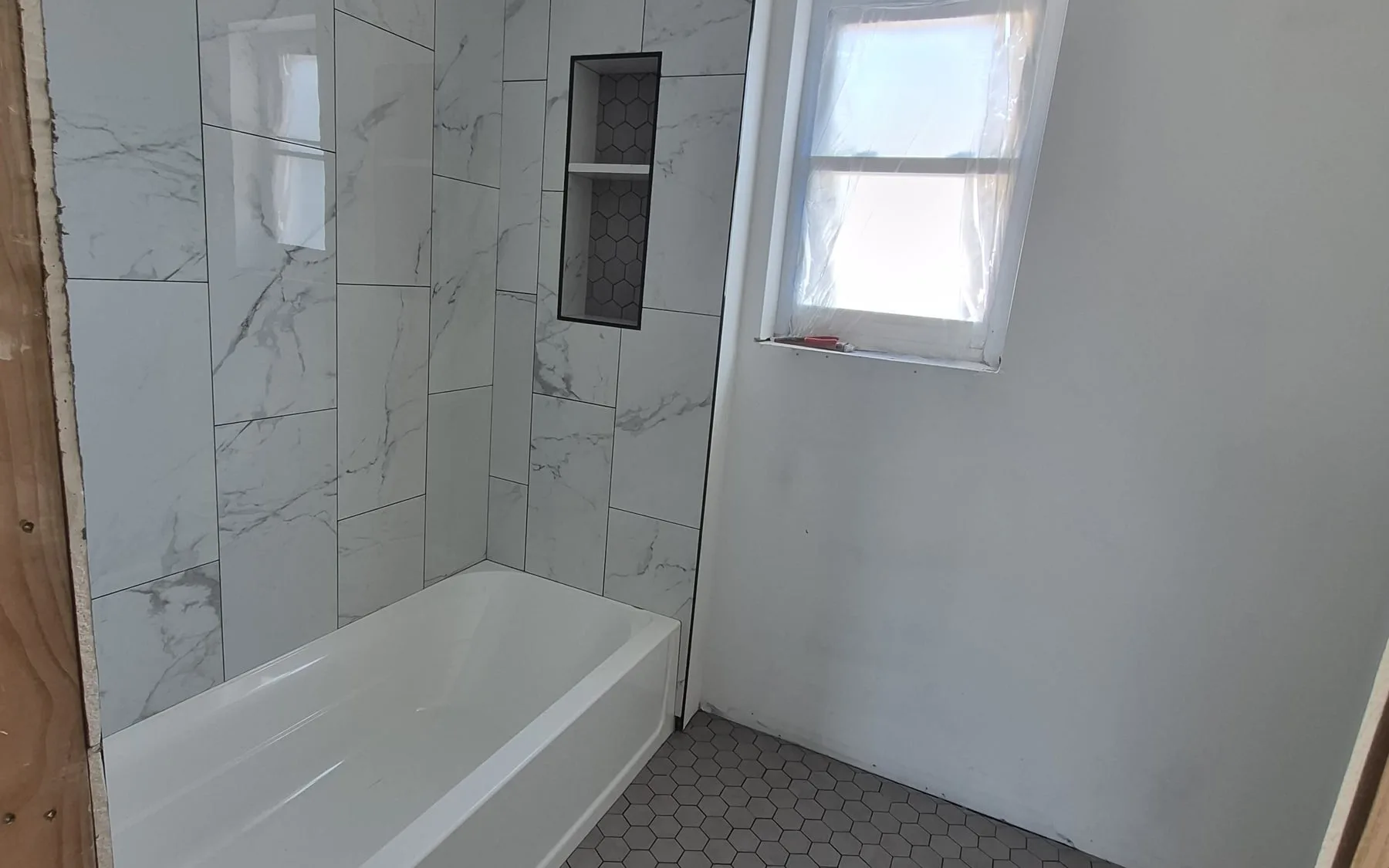
Two recent Manhattan bathroom projects. Each links to a full case study with before-and-after photos, materials list, and timeline.
Service Areas
We’re based in Newark, NJ, and we work across the NYC metro from there. Five boroughs, Long Island, Yonkers, and northern New Jersey are all on the standard route.
And 30+ surrounding cities within a 50-mile radius of Newark, NJ
FAQs
Everything we get asked about scope, timeline, materials, and how the work actually runs.
Two timelines run in parallel. Design and approvals: typically 4 to 10 weeks for a standard co-op or condo bathroom — building alteration agreement review, DOB plumbing and/or construction filing where required, board approval, and contractor onboarding into the building. Build itself: 5 to 8 weeks for a single bath; 7 to 10 weeks for a primary bath gut; 9 to 12 weeks for a two-bath simultaneous gut. Buildings with stricter alteration committees or unusual structural conditions push these higher.
In most co-op and condo buildings, yes — even for a renovation that doesn't change layout. The alteration agreement governs work hours, freight elevator scheduling, contractor COI requirements, dust and noise rules, and a security deposit that's held until the punch list is signed off. Townhouses and brownstones don't have alteration agreements, but most still need DOB plumbing or construction permits. We pull and manage all of it.
Layout changes are possible but constrained by two things: the building's wet-over-dry rule (most NYC buildings prohibit running plumbing fixtures over a neighbor's living space or kitchen below) and structural beam locations (which limit where you can drop new drains). In a pre-war building you typically have less flexibility than in a modern condo. We do a layout feasibility check during the consultation by reviewing the building's existing plumbing risers and the apartment below; if the layout you want isn't possible, we tell you in week one rather than week six.
Most NYC co-ops and condos require that any new plumbing fixture (toilet, shower, tub, sink) be located either over an existing wet area in the apartment below or within the existing wet-zone footprint of your unit. Moving a toilet five feet to the other side of the bathroom often triggers this rule. The remedy is either staying within the existing fixture footprint, getting the building's written approval for a wet-over-dry exception (rare), or accepting a layout that works within the rules. We figure this out before design, not during construction.
Pre-war buildings (typically built before 1945) often have cast iron drain stacks, occasional lead waste lines, and galvanized supply piping. We don't replace the building's main risers (that's a building responsibility) but we replace the apartment's branch piping during a remodel — copper, PEX, or PVC depending on what's appropriate. Pre-war waste connections can be quirky; we plan for hidden surprises (occasional rotted-out cast iron behind tile) and price contingency into the project.
Yes. NJ Home Improvement Contractor (HIC) license, NY State licensed master plumber on every plumbing rough (long-term partner — files NYC HIC and DOB permits where required under their license), NY State licensed electrician on every electrical rough (same arrangement), general liability insurance with NY-coverage, and workers' comp on every employee. The COI is filed with the building before work starts; the building's managing agent typically requires it before issuing the alteration agreement.
Yes — freight scheduling, lobby protection, COI filing, work-hour windows, debris removal protocols, security-desk sign-in for trades, and end-of-day clean-up to building standard are part of every Manhattan project. We've worked enough Manhattan buildings that the routine is set: the project lead handles the scheduling, the trades show up at the right time, the freight isn't held up, and the doormen don't get angry calls from neighbors.
Three rough tiers: high-end (custom marble slab, designer fixtures, fully custom vanities, motorized shower glass) — significantly higher than market average. Mid-range (premium tile and stone, quality off-the-shelf fixtures, semi-custom vanities) — the most common scope we run. Budget-conscious (well-built but standard finishes, refinish-where-possible) — for renovations focused on function and basic aesthetic update. Manhattan baseline costs run higher than NJ or outer-borough work because of building logistics overhead, COI requirements, and shorter work-hour windows. Specific pricing comes after the consultation.
Project intake
Free Consultation
Call to walk through your project, or schedule a free consultation — by video if you can’t be on site, in person if you can. We bring sample materials, a measuring kit, and a written scope back to you within a few business days.